All Post By

cercadmin

CERC Seminar: What is Knowledge in the Age of AI?

On September 17th, CERC was honored to have Prof. Liz Jackson to deliver a talk titled “What is Knowledge in the Age of AI?”. This seminar is also the first one of the CERC 2026 fall semester seminar series “Educational Research, Knowledge, and Artificial Intelligence: Beyond Scientism and Individualism?”. The talk attracted more than 100 participants (including both in-person and online) from diverse background.

In this seminar, Prof. Jackson discussed different understandings of intelligence and wisdom in ancient Greek and Chinese philosophy, such as conscious and unconscious wisdom. Building on this discussion, Prof. Jackson observed that although Large Language Models (LLMs) perform better in conscious intelligence (in form of deductive reasoning), they can be significantly deficient in defeasible reasoning (as they often mistake generals for universals) and unconscious wisdom (as they lack the embodiment such wishdom requires). Prof. Jackson further argued that researchers and educators should pay more attention to such deficiencies of LLMs when implementing them in educational settings. That is not only because LLMs have deficiency in reasoning, but also because they are highly influenced and even determined by the human knowledge fed to them as well as the capitalist logic they operate on, which manifest in their sycophacy towards users.

Prof. Jackson’s talk sparked vibrant discussions among the audience. Many questions were asked about how educators should utilize AI and LLMs in educational practices. Prof. Jackson further clarified that the deficiencies of LLMs do not mean that they can never be used in education, but rather it reminds us of what is valuable and educationally significant in human interaction and critical thinking that should not be substituted by the utilization of AI.

Prof. Jackson’s talk shed light on the issue of AI and education from a perspective of global philosophy. In the upcoming seminars of this semester, CERC speakers will continue to provide insights on the how education can grapple with the rapidly advancing technology, through drawing on a wide range of philosophical resources.

Evaluation of an English Teacher Certification Course for Non-Formal Private Tutors in Hungary

On June 5, 2026, the Shadow Education SIG successfully held the seminar “Evaluation of an English Teacher Certification Course for Non-Formal Private Tutors in Hungary”, delivered by Agnes Pataki, a PhD student at Eötvös Loránd University in Hungary.
Chaired by Professor Mark Bray, UNESCO Chair Professor at The University of Hong Kong, the seminar explored the effectiveness of a teacher training program that provides an English teaching certification to private tutors who typically lack formal teaching credentials. Drawing on a qualitative design that included document analysis, classroom and microteaching observations, and interviews, the talk highlighted how the program’s structured methodology equips tutors with practical pedagogical tools, leading to an enhanced understanding of teaching methods and the extensive development of their teacher identity and professional commitment.
The seminar accommodated both online and onsite participants, reflecting strong engagement from a global audience. The session sparked a very deep discussion with scholars from Hong Kong, India, Hungary, and mainland China regarding how professional support and communities can improve teaching quality, proving to be just as essential in shadow education as they are in the formal education sector.
With this seminar, we ended our SIG seminar for this academic year. We look forward to having more SIG meetings next year.


80th Anniversary Lecture in Seoul National University

Seoul National University (SNU) was established in 1946 as the first comprehensive university in postcolonial Korea. Its College of Education has organised a series of Master Classes in Education Research to mark this event. The first lecture in the series was delivered on 27 April 2026 by CERC’s Mark Bray, holder of the UNESCO Chair in Comparative Education.

The lecture was entitled ‘Learning from Other Countries in the Education Sector: Goals, Lenses and Methods’, and was chaired by Professor Sung Sang Yoo.

During the lecture, Professor Bray drew particularly on the book Comparative Education Research: Approaches and Methods published in the series CERC Studies in Comparative Education. Alongside the original English-language version of the book are translations into 10 languages including Korean. During the lecture, Professor Bray stressed the importance of clarity in units for comparison, alongside opportunities for creativity in this regard field. He also highlighted the need for critical lenses when seeking to learn from other countries.

The lecture attracted many students, particularly from Masters and Doctoral programmes but also undergraduates. It led to lively discussion and exchange, not only with Professor Bray but also among the students themselves.


CERC has had various longstanding links with SNU, and in July 2026 will take partnerships further with group of postgraduate students led by Associate Professor Nutsa Kobakhidze and Research Assistant Professor Lee Ka Ya joining the 26th International Conference on Education Research. Participants also include Xing Shuyu, the CERC Secretary. In conjunction with SNU colleagues, the will prepare a special section in the Asia Pacific Education Review related to the conference theme on ‘Education in the “Post-” World’.

CERC Holds 2026 Annual General Meeting and Annual Lecture

On May 22, 2026, the Comparative Education Research Centre (CERC) successfully held its Annual General Meeting (AGM) from 1:30 to 2:30 pm, both in person and via Zoom. The meeting brought together members of the Centre to review the past year’s developments, reflect on key achievements, and discuss strategies for future growth. Director Jeremy Rappleye presented the annual report, highlighting CERC’s ongoing contributions to comparative education research, publications, seminars, and international collaboration.

Following the AGM, CERC was honoured to host its 2026 Annual Lecture delivered by Professor Anthony Welch from the University of Sydney. Prof. Welch’s talk, titled “From Knowledge Diplomacy to Knowledge Security: Developments, Implications and a Warning for Comparative Education” called attention to the decline of Knowledge Diplomacy and the accelerated securitization of higher education in a increasingly polarized world. Through critically analyzing the case of Australia, Prof. Welch emphasized the importance of taking geopolitical situation into account in research of comparative education. The talk was well received and sparked vibrant discussions.

This year’s AGM and lecture underscore CERC’s commitment to fostering critical dialogue, advancing scholarship, and building a vibrant research community locally and globally.

CERC Seminar: Unfused Horizons: Challenges of an Intercultural Theorising of Education

CERC was honored to host Dr. Karsten Kenklies’ seminar on the 14th of May. The title of the talk was “Unfused Horizons: Challenges of an Intercultural Theorising of Education”. The talk was well-attended with both in-person and online audience.

In this talk, Dr. Kenklies called attention to the increasing inclusion of “non-Western” philosophical resources in recent studies of philosophy of education. Acknowledging the values of such approach, Dr. Kenklies was also concerned about the lack of methodological/disciplinary reflection behind the inclusion, and about the risk of presenting a false dichotomy of “the West” and the rest. To illustrate the diversity within the West, Dr. Kenklies discussed the difference between the Anglo model and the Germanic model of constructing the field of educational studies and positioning the role of philosophical studies in the field. In the Anglo model, educational studies are defined as the studies of educational institutions, i.e. schools, and philosophical arguments are utilized to discuss especially normative issues relevant to schooling. On the other hand, the object of interest in the Germanic model of educational studies is the pedagogical relation, i.e. influence with intention of improvement, which can happen both formally and informally, within and outside schools. And in the later model, philosophies are used to reflect on the nature and boundary of the pedagogical relation. Emphasizing that these are only two models among many and there is no better or worse model, Dr. Kenklies concluded that the intercultural approach in philosophy of education should not stop at the level of adding different perspectives on pre-defined issues, but rather should facilitate a deeper comparison and conversation among different models of imagining “education”.

The rich talk by Dr. Kenklies sparked vibrant discussion both in the seminar room and online. Audience appreciated the speaker’s scrutiny over the difficulties of intercultural approaches, and discussed with the speaker possible ways of moving forward, especially in the context of East Asian and Hong Kong. This talk provided profound insights for the CERC community since intercultural approach has long been the emphasis of research here.

CERC’s Management Committee Meeting on May 8th

CERC held its thrid Management Committee Meeting in the academic year 2025~2026 on May 8th. The meeting recapped CERC’s activities in the CESHK and CIES conferences. CERC also shows strong sense of presence in upcoming conferences through keynote speeches delivered by MC members. CERC also announced the schedule and theme of the Annual General Meeting (AGM) and Annual lecture.

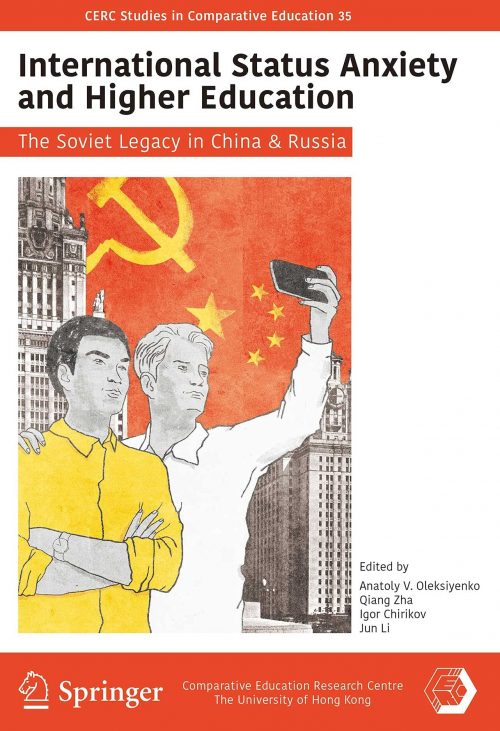
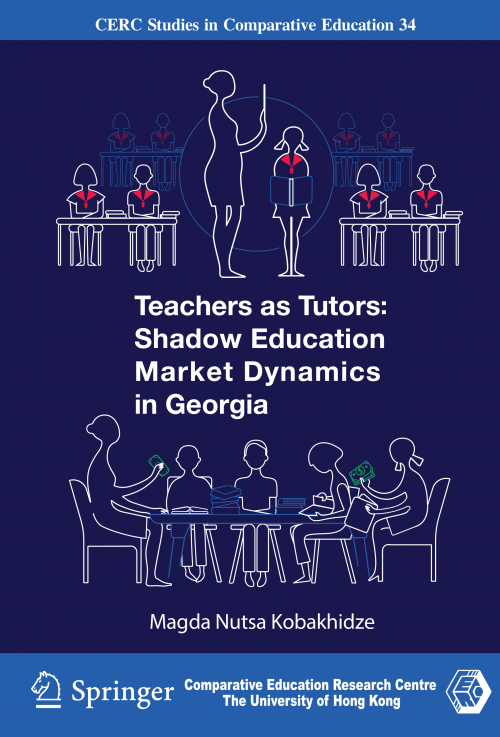
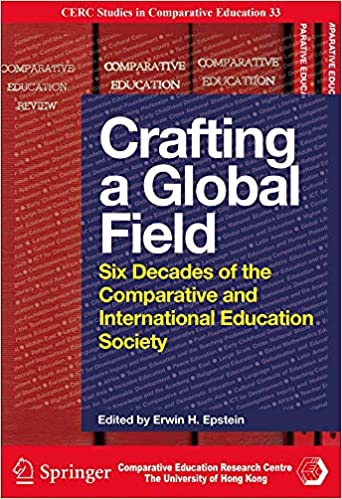
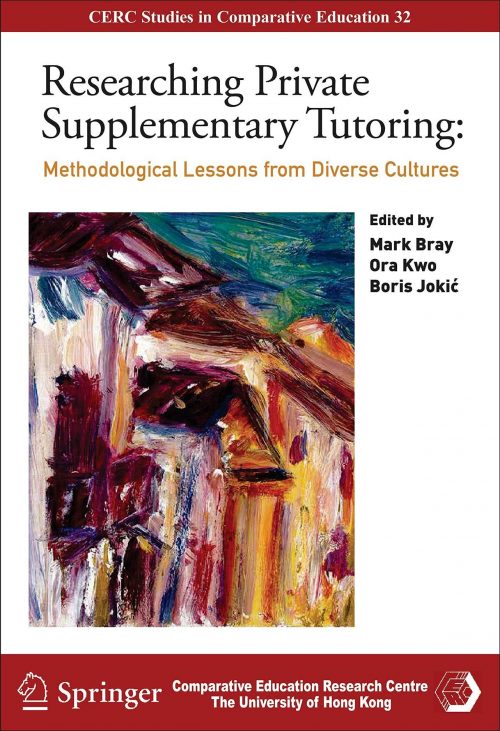
CERC has made significant progress in publishing new CERC books. Two books are in the production stage (CERC Studies in Comparative Education 37 & 38), one in final revision stage (CERC Studies in Comparative Education 39). CERC is also expecting two new books in the monograph series.

The meeting also introduced the outline of CERC seminar series in 2026 fall semester. The series contains 4 seminars and aims at creating a deep dialogue between leading ‘Western’ theoretical trends (Science and Technology Studies (STS), including AI) and ‘East Asian’ philosophies.

Scaling eliteness: Private tutors’ self-promotion in commodified shadow education


On March 12, 2026, the Shadow Education SIG successfully held the seminar “Scaling eliteness: Private tutors’ self-promotion in commodified shadow education”, delivered by Vincent Wai Sum Tse, Joint PhD in Applied Linguistics at Monash University and the University of Warwick.

Chaired by Professor Nutsa Kobakhidze of HKU, the seminar explored how private tutors in Hong Kong’s shadow education sector construct and promote images of prestige, exclusivity, and distinction in their online profiles. Drawing on critical discourse analytic perspectives, the talk highlighted how tutors present their academic backgrounds, unique experiences, and forms of expertise to position themselves as elite figures within an increasingly commodified education market.

The seminar was attended by five participants on site and 11 participants online, reflecting strong engagement from both in-person and virtual audiences. The session sparked thoughtful discussion on the marketization of education and the ways in which eliteness is strategically communicated in contemporary shadow education.

We look forward to having more SIG meetings in the following months.

CERC Seminar: Sex Robots as Perfect Confucian Wives? Which Confucianism? Whose Fantasy?

CERC was honored to host Prof. Wang Pei’s seminar on the 22nd of January, 2026. The title of the talk was “Sex Robots as Perfect Confucian Wives? Which Confucianism? Whose Fantasy?” The talk attracted more than 70 participants (including both in-person and online) from diverse background.

In this talk, Prof. Wang criticized the interpretation that a sex robot would meet the standard of an ideal wife in Confucianism. Through examining the classics, Prof. Wang articulated how “wife” was depicted in Confucianism and claimed that sex robot would not qualify even by the most conservative standard. Prof. Wang also elaborated on a long-neglected aspect in Confucian studies, namely love and sex in spousal relationships. By introducing hexagram in the Book of Changes, Prof. Wang interpreted that ancient Chinese depicted bodily resonance in intimate relationships as mutual exposure of ones vulnerability in front of the other, which adds aesthetic dimension to the moral aspect that is usually emphasized in Confucianism.

Prof. Wang’s talk sparked vibrant discussion in the seminar room. Audience not only asked about the traditional philosophy, but also discussed themes such as human/AI relationship and techno-solutionism with the speaker. Prof. Wang also clarified the differences and connections among different kinds of relations in Confucianism. Last but not least, Prof. Rappleye exchanged ideas with the speaker on methodology of navigating oneself through the influence of Western modern legacies in researching traditional philosophy.

This talk is in line with previous CERC talks on philosophies in different traditions. CERC believes that traditional ideas can and should be put in dialogue with contemporary issues and will continue to provide space for such dialogues.

Book about Shadow Education in Africa now available in Chinese

In 2021 CERC published in its Monographs series a book by Mark Bray entitled Shadow Education in Africa: Private Supplementary Tutoring and its Policy Implications. It was the first such work to focus on Africa, and has attracted considerable attention including through reviews in 16 journals that can be accessed through the CERC website.

The book has been translated into Arabic, French and Portuguese, which are the dominant official languages in Africa, and is now available in Chinese.

Translation of the Chinese version was led by (i) Li Siyuan together with Huang Yirui and Jiang Tongling at Northwest University, Xi’an, and (ii) Tian Renxiang at the University of Hong Kong. CERC greatly values their efforts.


We also much appreciate the partnership with the Centre for International Research in Supplementary Tutoring (CIRIST) at East China Normal University (ECNU) in supporting the original work and disseminating this Chinese version.


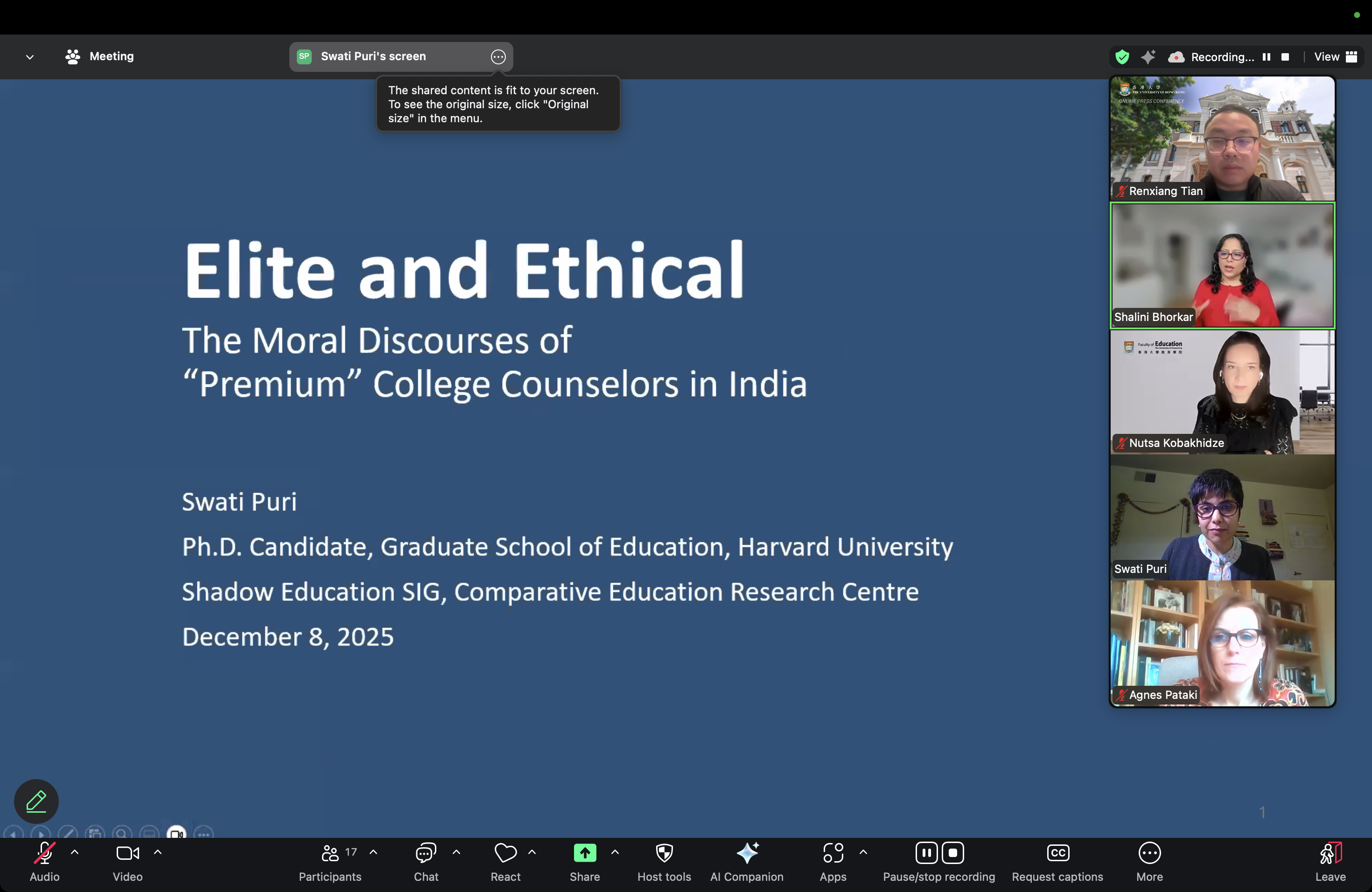
Shadow Education SIG: Elite and Ethical: The Moral Discourses of “Premium” College Counselors in India

The Shadow Education SIG successfully hosted an engaging online talk on December 8th, bringing together 19 participants from across the globe to explore new insights into the growing field of shadow education. The session focused on the underexamined role of elite independent consultants in India and how their moral narratives shape inequalities in global university admissions.

The speaker, Swati Puri, a Ph.D. Candidate from Graduate School of Education, Harvard University,  presented findings based on interviews and analyses of marketing materials from high-end consultancies. The talk highlighted how these consultants craft identities built on claims of serving “diverse” clients, delivering superior guidance, and maintaining ethical standards. At the same time, markers of “premium” status, such as high fees, bespoke services, and international credentials, help legitimize a system that remains largely inaccessible to the majority of Indian students.

Participants engaged actively in the discussion, raising questions about the implications for equity, the possibility of regulating the sector, and the role emerging technologies like AI may play in reducing information asymmetry.

The event concluded with positive feedback, noting the talk’s timely relevance and its contribution to critical conversations about global education, social mobility, and the privatization of admissions support.

This session is part of an ongoing series of talks on shadow education research by Shadow Education SIG at the Comparative Education Research Centre (CERC) at the Faculty of Education, the University of Hong Kong.