Browsing Category

Announcement

CERC’s Management Committee Meeting on December 3rd

CERC held its second Management Committee Meeting in the academic year 2025~2026 on December 3rd. The meeting covered the centre’s activities in the fall semester including three CERC seminars on diverse but relevant topics and the inaugural HKU-THU Symposium on educational traditions and AI. Two Special Interest Groups (SIG) also shared their fruitful activities during the semester.

The meeting also highlighted CERC’s presence in upcoming conferences, including that of Philosophy of Education Society of Australasia (PESA), Comparative Education Society of Hong Kong (CESHK) and The Comparative and International Education Society (CIES). Many members of CERC will attend, present and deliver keynote speeches at the conferences. The meeting envisioned more international and interdisciplinary events in the next semester.

Knowledge Exchange: Decolonial and World Philosophies Conference at the Chinese University of Hong Kong

On November 25 and 26, 2025, led by Dr. Ka Ya Lee, several members of the Traditions SIG Reading Group from the Comparative Education Research Centre (CERC) attended a conference titled “Envisioning Futures: Decolonial and World Philosophical Approaches.” The conference was hosted by the Department of Philosophy, the Chinese University of Hong Kong. During the two-day conference, CERC members had the opportunity to engage with African, American, Chinese, European, Indian, and South American scholars, who offered valuable and inspiring perspectives on decolonial and world philosophies. Below are some highlights from the conference and our debrief discussion. 

What is philosophy?

One theme that emerged in our debrief focused on the definition of “philosophy.” On the second day of the conference and especially in the last documentary, many scholars attempted to challenge a Eurocentric way of defining philosophy. However, we also noticed the difficulty of such attempts: “if everything is philosophy, then the word, ‘philosophy’ loses its meaning.”

What counts as decolonial philosophy(-ies)?

We further compared the sessions of the two days and found the second day to be more political. Some scholars framed decoloniality (primarily) in a combative way, positioning liberation and combativeness as the key features of decoloniality. Such claims might suggest a universalistic view of what counts as decoloniality and decolonial philosophy, potentially excluding Chinese or Eastern ontology that emphasizes harmony. Should we agree on such a liberation-centered definition of decoloniality? We hope to explore framing decolonial philosophies in a more sensitive way that respects diverse philosophical commitments.

Different ways of approaching decolonial work

We further identified several types of decolonial approaches in philosophy based on the presentations across the two days (these categories were mainly proposed by Dr. Ka Ya Lee):

  1. Critique the Western epistemic coloniality (e.g., Professor Edwin ETIEYIBO’s keynote; Ms. Dalorina NATH), or coloniality itself (e.g., Professor Shuchen XIANG)
  2. Use Western epistemic resources to criticize colonialism (e.g., Fanon; Trần Đức Thảo, a Vietnamese phenomenologist introduced by Professor Hayden KEE)
  3. Use non-Western epistemic resources to criticize colonialism (e.g., Professor Jacob BENDER)
  4. Develop non-Western epistemic resources by introducing non-Western thinkers or philosophers or their concepts to the mainstream discourse. (e.g., Mr. Anish MISHRA; Professors Darlene DEMANDANTE & Kelly AGRA)
    • Its variation: facilitate the “South-South” dialogue by putting two or more underrepresented or non-Western philosophers into conversation with one another (e.g., Professor Monika KIRLOSKAR-STEINBACH’s keynote).

We also discussed the metaphors of “bad cop” versus “good cop” (note: the former refers to scholars who actively engaged in the criticism of the West, while the latter refers to those who focus on dialogues within world philosophies, but we agreed that both roles share decolonial commitments). Based on the four approaches summarized above, we believed that the “good cop” is closer to the third and fourth approaches, but need not pursue non-Western philosophy solely for decolonial purposes. We can study non-Western philosophy for its own sake, yet as our contributions to underrepresented traditions accumulate, such scholarship will eventually contribute to the decolonizing of the field of philosophy.

Recurring theme #1: Challenging dualism and binaries

Another recurring theme observed across several presentations was overcoming dualistic or binary thinking. Professor Alejandro A. VALLEGA discussed the binary opposition between the colonizer and the colonized in language, challenging the dualism, which assigns passive and victimized roles to the colonized and positions the colonizer as always active. Many other presentations also echoed challenges to various binaries, such as rational versus irrational, human versus animal, mind versus body, and so on. 

While identifying this recurring theme, we wondered whether dualism is always the device of colonization. Alternatively, if we consider the potential coloniality within certain non-Western traditions—which are not always rooted in dualism—then perhaps there are different devices of colonization beyond the dualistic way of thinking. We briefly compared this with the Confucian distinction between the human and the non-human, but we noted that this is not a strict dualistic concept in Confucianism, and that some Confucian scholars will not suggest that humans are superior to non-human.

Recurring theme #2: Challenging cognitivism and aesthetic universality

Another key theme we identified during the conference is a challenge to cognitivism, i.e., the idea that learning and thinking are not solely cognitive processes. Interestingly, many conference presentation styles appeared to focus primarily on cognitive reasoning, often lacking attention to embodiment. Mr. Friso Timmenga shared that cognitive thinking is actually a part of embodied knowing, as we use various parts of our bodies to process information. This suggests that learning and thinking exist on a continuum, extending beyond purely logical reasoning to encompass practices and transformative experiences. 

In relation, Mr. Timmenga shared about Aesthetic Universality in the conference. In our previous understandings, aesthetic or arts education is more oriented toward a realm of experience, and in Chinese philosophy, an aesthetic “境界” (realm) might suggest the highest state of self-cultivation that is relevant to the ideal of harmony. However, in the conference sessions, the aesthetic universality is used to refer to an epistemology that is closer to sensory perception embedded in daily and mundane experience, rather than merely a theoretical state.

On the second day, the final agenda item was watching the documentary Philosophical Journeys: DRC (shared by Professor Alena Rettová). This can be seen as an example of resistance to cognitivism, as it appeals not only to our cognitive faculties but also to our essential, existential dimensions.
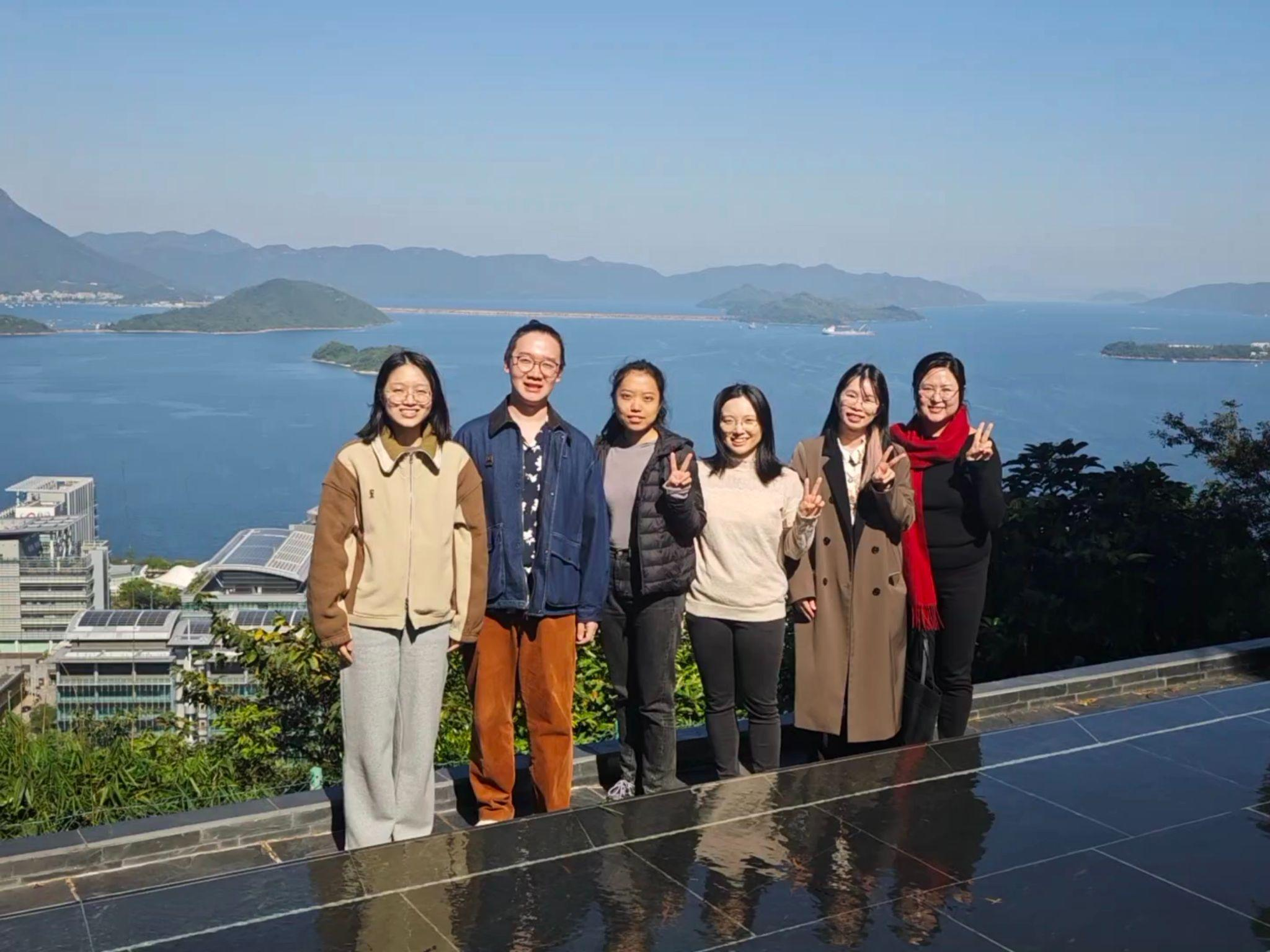
Group Picture in front of Pavilion of Harmony


Launching the Arabic Version of Comparative Education Research Book

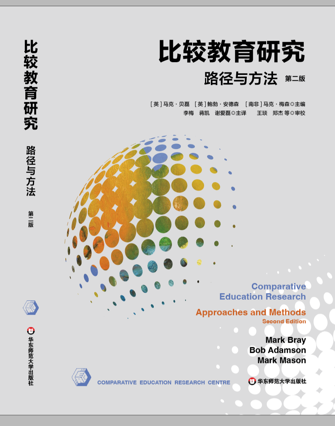
CERC’s most popular book (see below) is Comparative Education Research: Approaches and Methods, edited by Mark Bray, Bob Adamson and Mark Mason. Arabic has now been added to the list of translations, becoming the 12th language in which the book has been published.

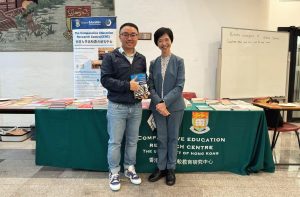
The Arabic translation was accomplished by Hanan Abdelrahim from Alexandria University in Egypt (pictured here with Mark Bray). It was launched on 11 November 2025 in a workshop organized by the Gulf Comparative Education Society linked to its biennial conference in Ras Al Khaimah, United Arab Emirates.

The Al Qasimi Foundation has generously sponsored publication of the book, in the first instance making it freely available online here. The book will be published in paper version in 2026.

Chinese Edition of Comparative Education Research Book

Among CERC’s 50+ publications, the most popular is Comparative Education Research: Approaches and Methods, edited by Mark Bray, Bob Adamson and Mark Mason. The book has been published in two editions, with translations into Farsi, French, Italian, Japanese, Korean, Portuguese, Russian, Turkish, and Spanish (and Arabic on the way).

The Chinese version of the first edition was published by Peking University Press in 2010, and now the second edition has been published by East China Normal University Press (Shanghai).

The book has been especially welcomed for its individual chapters on different units for comparison. They include places, systems, times, genders, cultures, values, policies, curricula, and ways of learning.

Further information on this new Chinese edition is available here. The English version may be purchased at discount price here.

CERC’s Management Committee Meeting on September 11th

CERC held its first Management Committee Meeting in the academic year 2025~2026 on September 11th. The meeting covered the center’s summer activities and discussed the academic events in the fall semester. Important events include: four CERC seminars delivered by cutting-edge educational scholars on diverse but relevant issues; four reading group activities which will delve into the philosophy of classical Confucianism and discuss its relations with education.

The meeting also highlighted CERC’s presence in upcoming comparative and international conferences, including that of The Comparative and International Education Society (CIES), Comparative Education Society in Europe (CESE) and Comparative Education Society of Hong Kong (CESHK).


Event Announcement: Upcoming Comparative Education Conferences 2025-2026

The Comparative and International Education Society (CIES) Annual Conference 2026: Re-examining Education and Peace in a Divided World will take place from March 28 – April 1, 2026, at San Francisco, CA.

The Call for Submissions is open and the deadline for all submission types is August 26, 2025, at 11:59pm ET. Please refer to the conference website for detailed information of submission and registration.


Oceania Comparative and International Education Society (OCIES) 53rd annual conference 2025 will be held from 23-26 November 2025, in Otautahi/Christchurch in Aotearoa New Zealand.  The theme will be “Education, Knowledge and Power in the Asia-Pacific”.

The deadline for abstract submission is 1 September 2025, please refer to the conference website for detailed information of submission and registration.


Comparative Education Society in Europe (CESE) conference 2026 will be from June 29 – July 2, 2026, at Roskilde University, Denmark. The theme will be “Worlds of learning: comparative perspectives on the future(s) of education”.

The deadline for proposal submission is February 15, 2026, please refer to the Call for Papers for detailed information of submission and registration.


Teachers Convene to Discuss Intangible Cultural Heritage

The UN 2030 Agenda for sustainable development highlights the transformative power of education in fostering cultural diversity and global citizenship. Intangible Cultural Heritage (ICH) – including oral traditions, performing arts, social practices, and traditional craftsmanship – plays a vital role.

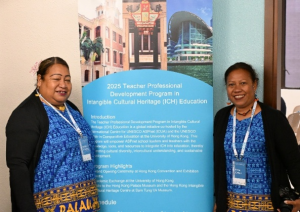
From 4-8 August, CERC welcomed primary and secondary teachers from eight countries to showcase and discuss their own practices. The teachers were from Bhutan, China, India, Oman, Palau, South Korea, Sri Lanka, and Uzbekistan. The co-hosts were the UNESCO Chair at HKU and the International Centre for UNESCO ASPnet (ICUA) in Sanya, China.

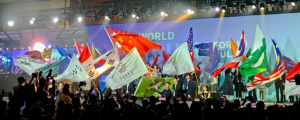
The opening dovetailed with a World Youth Pulse forum at the Hong Kong Exhibition and Convention Centre. This event brought together youth from multiple Chinese locations with counterparts from a wide range of countries in the region and beyond.

Then, on the second and third days, teachers from the eight countries mentioned above moved to the HKU campus for workshops to discuss curriculum and pedagogy for ICH education. Opening keynotes by Florian Knothe, Director of the HKU Museum and Art Gallery, and by Wang Dan in the HKU Faculty of Education set the scene.

Participants then presented on themes including:

  • peepal trees (India),
  • kungqu opera and guqin (China),
  • triangles in arts and crafts (Bhutan),
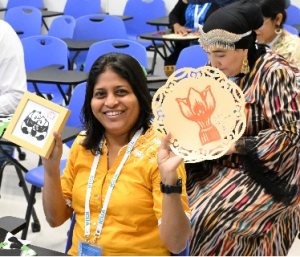
  • papercutting (China),
  • weaving (Palau),
  • hanji traditional paper (South Korea),
  • dumbara rata traditional mats (Sri Lanka),
  • traditional clothing (Uzbekistan),
  • yoga (India),
  • moxibustion (China), and
  • traditional chanting (Palau).

The teachers highlighted challenges as well as the achievements, discussing approaches for different age groups and ways to handle the examination foci of many education systems.

Next, moving beyond the HKU campus, the group visited Hong Kong’s Sam Tung Uk museum. This restored heritage building provides an authentic insight into the lifestyle of villagers long before the region became urbanised. The museum includes an ICH Centre with focus on themes including dragon boats, bamboo scaffolding, and lion dances. Next was the Hong Kong Palace Museum, which shows over 900 priceless treasures in collaboration with its Beijing counterpart.

Some of the dynamics are captured in this video. Participants agreed that the programme was an unforgettable experience in international sharing and exchange. Focusing on pedagogy as well as curriculum content, it brought to the fore multiple themes on how the E of UNESCO (i.e. Educational) can be linked meaningfully and productively with the C of UNESCO (i.e. Cultural). ICUA is now following up with a compendium of good practices to ensure lasting impact from the event.


CERC Holds 2025 Annual General Meeting

On May 13, 2025, the Comparative Education Research Centre (CERC) successfully held its Annual General Meeting (AGM) from 3:00 to 4:00 pm, both in person and via Zoom. The meeting brought together members of the Centre to review the past year’s developments, reflect on key achievements, and discuss strategies for future growth. Director Jeremy Rappleye presented the annual report, highlighting CERC’s ongoing contributions to comparative education research, publications, seminars, and international collaboration.

Following the AGM, CERC was honoured to host its 2025 Annual Lecture delivered by Professor Michele Schweisfurth from the University of Glasgow. Her talk, titled “Comparative and International Education: Polarisation Inside and Out,” examined the increasing divides—both within the field and in the broader global context—and offered thought-provoking insights on how scholars might respond. The lecture was open to the public and attracted participants from across Hong Kong and beyond, stimulating rich discussion and engagement.

This year’s AGM and lecture underscore CERC’s commitment to fostering critical dialogue, advancing scholarship, and building a vibrant research community locally and globally.

Celebrating the Faculty’s 40th Anniversary and CERC’s 30th Birthday


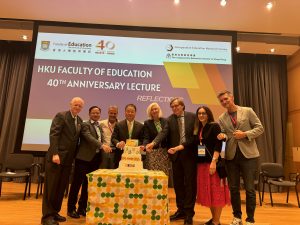
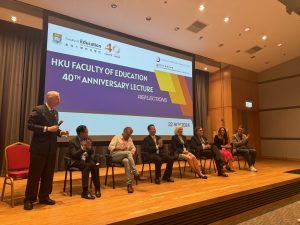
The Comparative Education Society of Hong Kong (CESHK) hosted its 35th Annual Conference at the University of Hong Kong (HKU) from November 22–24, 2024. This year’s conference was particularly significant, marking the 40th anniversary of HKU’s Faculty of Education and the 30th birthday of the Comparative Education Research Centre (CERC).

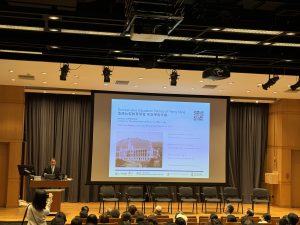
A major highlight of the conference took place on November 22, with a celebratory session honoring these milestones. The session featured keynote addresses by Prof. Yang Rui, Dean of the Faculty of Education, and Prof. Mark Bray, UNESCO Chair in Comparative Education and a founding member of CERC.

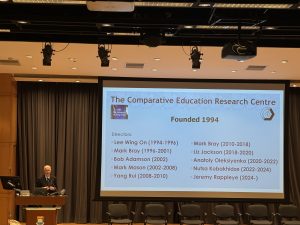
Dean Yang Rui opened the session by showcasing the Faculty’s remarkable development and achievements over the past four decades while outlining its future directions, particularly in the field of comparative education. Following this, Prof. Mark Bray reflected on CERC’s journey from its establishment in 1984 to its current role as a prestigious center in comparative education. He highlighted major milestones, including the publication of seminal works, international collaborations, and contributions to educational policy and practice globally.

An exceptional moment in the session was the reunion of seven past and current CERC directors, including the current director, Prof. Jeremy Rappleye. Each director shared their personal experiences and contributions during their tenure, offering insights into CERC’s growth and influence in the field. The session was skillfully facilitated by Emily Wong and Tian Renxiang, CERC’s past and present secretaries, and attended by scholars and educators from across the globe.

The session was followed by other conference highlights and sessions, such as the film screening of National Exam on November 23, inspired by former CERC Director Prof. Nutsa Kobakhidze’s research on shadow education. Over three days, the conference brought together more than 250 participants from over 15 countries, presenting cutting-edge research across various aspects of comparative education.

As a special gesture, attendees of the CERC 30th Anniversary Celebration received commemorative souvenirs, including a CERC magnet, notebook, and a publication chronicling its history.

The CESHK 2024 conference not only celebrated past achievements but also set the stage for future collaborations and advancements in the field of comparative education. It was a memorable gathering, underscoring the impact of CERC and the Faculty of Education in fostering global educational research and dialogue.

CERC’s Management Committee Meeting on September 26th


CERC held its first Management Committee Meeting on September 26th. The newly elected CERC Director, Jeremy Rappleye, welcomed the new Management Committee (MC) members and shared his vision for the center’s growth over the next two years. The MC approved the minutes from the previous meeting and introduced themselves, discussing their research backgrounds and potential contributions.

Key updates included progress in CERC’s book series and the upcoming release of the CERC-sponsored film Shadow Education in Georgia. Plans for the CESHK-CERC joint conference in November were also discussed, with CERC set to play a significant role.