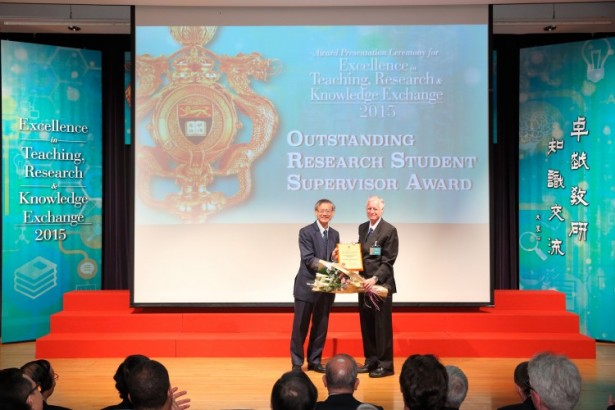

Mark Bray becomes President of the Comparative & International Education Society
The 60th anniversary conference of the Comparative & International Education Society in Vancouver concluded with a great 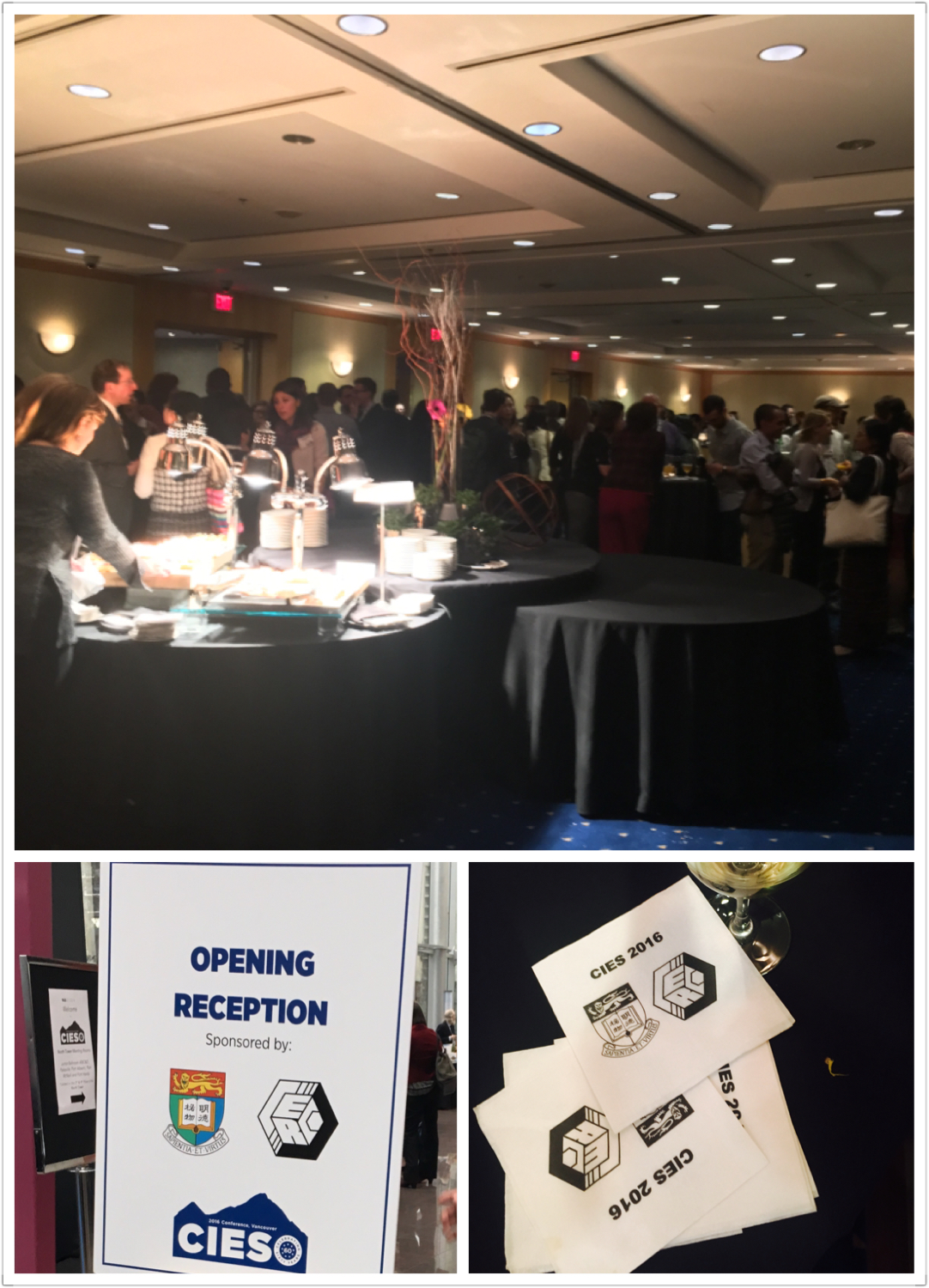 success. The conference was attended by 2,800 academics and education professionals including 31 delegates from the Faculty of Education. CERC and the Faculty
 had great visibility. The University and CERC logos were prominent on the conference bags, signs for the Faculty-sponsored opening reception and elsewhere.
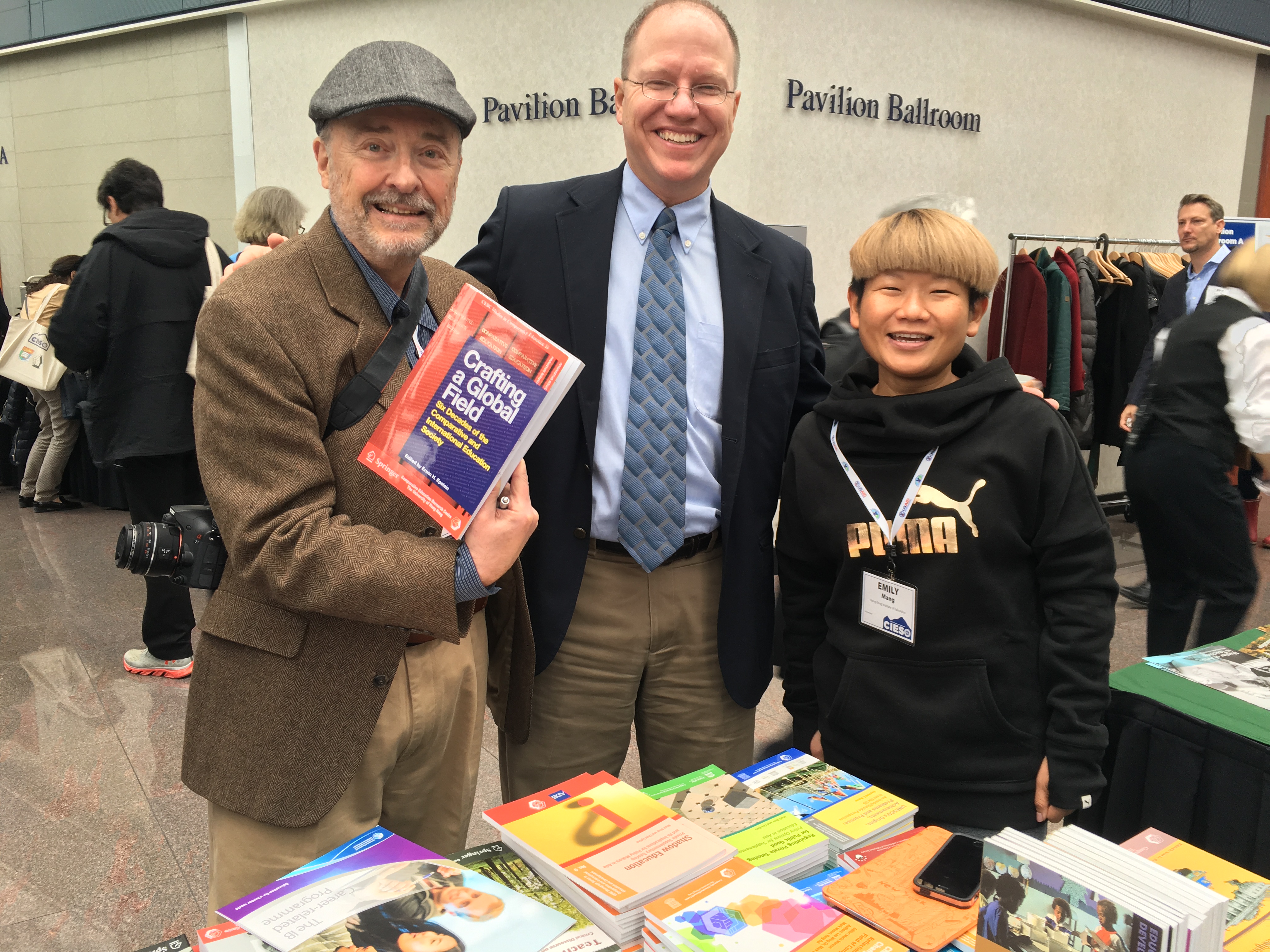
CERC had its book exhibition in a prominent location. It was the focal point for the HKU delegates and other academics interested in its work in comparative education.
As President-Elect, Mark Bray led the organization of the conference, assisted by Carly Manion (University of Toronto), Nutsa 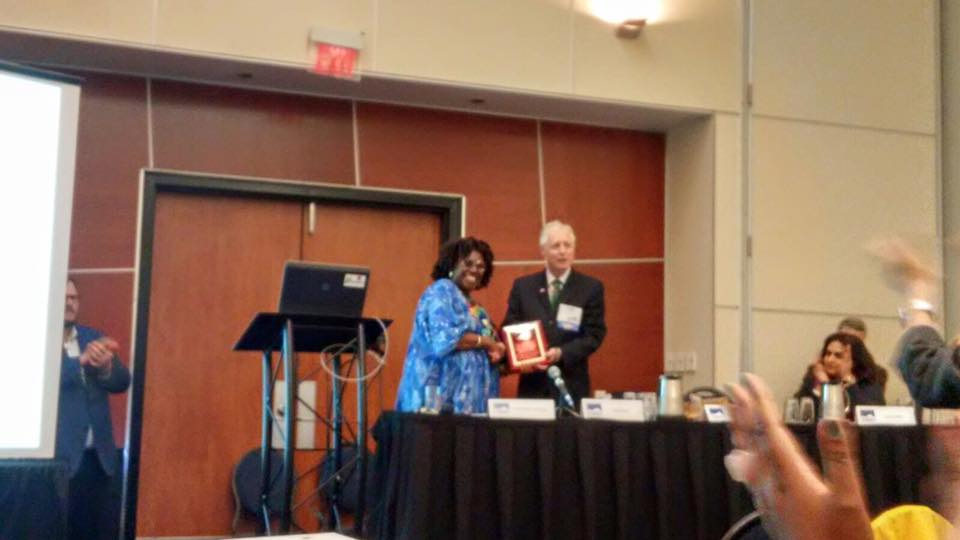 Kobakhidze (CERC), Emily Mang (HKIED) and student volunteers from HKU and the University of British Columbia (UBC). During the conference the CIES presidency was transferred to Mark Bray.
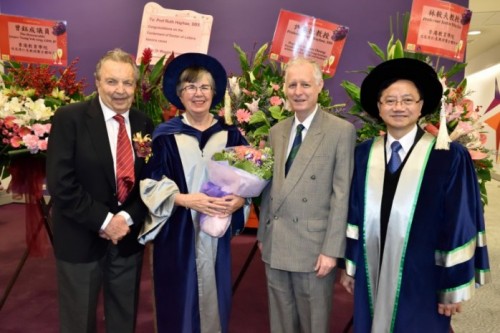
Honorary Doctorate for Ruth Hayhoe
CERC is delighted that on 15 December 2015 one of its distinguished Associate Members, Prof. Ruth Hayhoe, was awarded an Honorary Doctorate by the Open University of Hong Kong (OUHK). The citation was read by Prof. Lee Wing-On, who was CERC’s first Director and is now Vice President of the OUHK.
Prof. Lee noted that Ruth Hayhoe is conversant with five languages, including Mandarin and Cantonese, and has devoted a lifetime to intercultural dialogue. Her autobiography published by CERC is entitled Full Circle: A Life with Hong Kong and China. It recounts how Ruth moved to Hong Kong from Canada in 1967 as a 21 year-old, working as a teacher in a local secondary school and undertaking much community work. She spent 11 years in Hong Kong during that period, “falling in love with Chinese people and Chinese culture”.
The next few years took Ruth Hayhoe to Shanghai, London, Toronto, Beijing and again Toronto, but in 1997 – the year that Hong Kong was reunited with China – she was appointed Director of the Hong Kong Institute of Education. This return to Hong Kong explains the title Full Circle. In 2002 she moved back to Canada – perhaps making a figure of eight – but she retains close contact with both Hong Kong and Mainland China.
CERC has published four other books written or edited by Ruth Hayhoe. They include Portraits of Influential Chinese Educators and Portraits of 21st Century Chinese Universities. As noted by Lee Wing-On, “one striking feature of Professor Hayhoe’s academic writing approach is story-telling”. For this pair of books she focused in individuals and institutions, while Full Circle is a deep and meaningful self-portrait.
In the picture above, Ruth Hayhoe is accompanied (left) by her husband, Walter Linde. Lee Wing On is on the far right, and between him and Professor Hayhoe is Mark Bray (HKU).
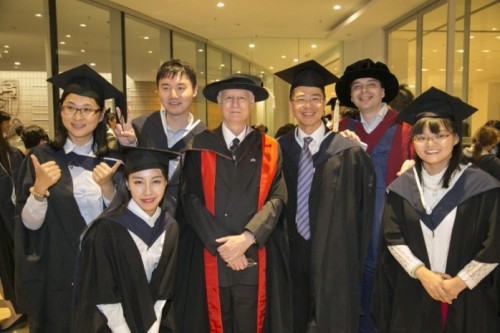
Congratulations to the 2014 CGSED Cohort on Graduation!
The 2014 cohort of CGSED officially graduated on the graduation ceremony held 4 December 2015.
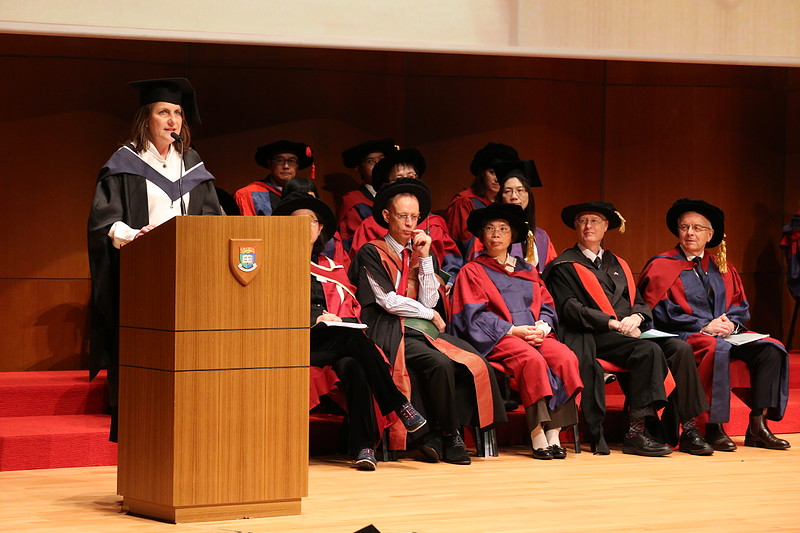
Leigh Dalgarno was addressing the whole congregation as a representative of all MEd students – and included on behalf of the CGSED group a reference to the Famous Cube!
Master of Education: Comparative and Global Studies in Education and Development
The University of Hong Kong is recruiting a new cohort of Master students. Apply (closing date 16 May 2016) and earn a Master of Education in Comparative and Global Studies in Education and Development from the Faculty of Education.
Comparison is a fundamental tool for all forms of enquiry. When applied to education in an international setting, it assists in identification of factors which shape education systems, processes and outcomes, and instruments for improvement. The comparisons in this specialism will be framed by theories and understandings of the forces of globalisation. These forces bring benefits for many people, but can also have negative dimensions.
This specialism will examine forces of continuity and change and the implications for educators. It will also focus on the nature of development in an international context and on the role of education in the processes of development. This will include analysis of all levels of formal education (early childhood to higher education), and various types of nonformal education. It will include particular reference to UNESCO’s Education for All (EFA) objectives in the context of the Millennium Development Goals (MDGs).
The specialist modules are:
- Themes and approaches in the field of comparative education
- Addressing the global-local nexus in education
- Education for sustainable development
- Critical issues in educational reform
In addition to four specialist modules, students will complete:
- a research methods course “Methods of Research and Enquiry” (2 modules equivalent);
plus - either an option of one elective module and a DISSERTATION (3 modules equivalent),
or an option of three elective modules and a PROJECT by Independent Study (1 module equivalent).
For further information about this specialism, please contact Professor Mark Bray on (852) 2219 4194, by email: mbray@hku.hk.
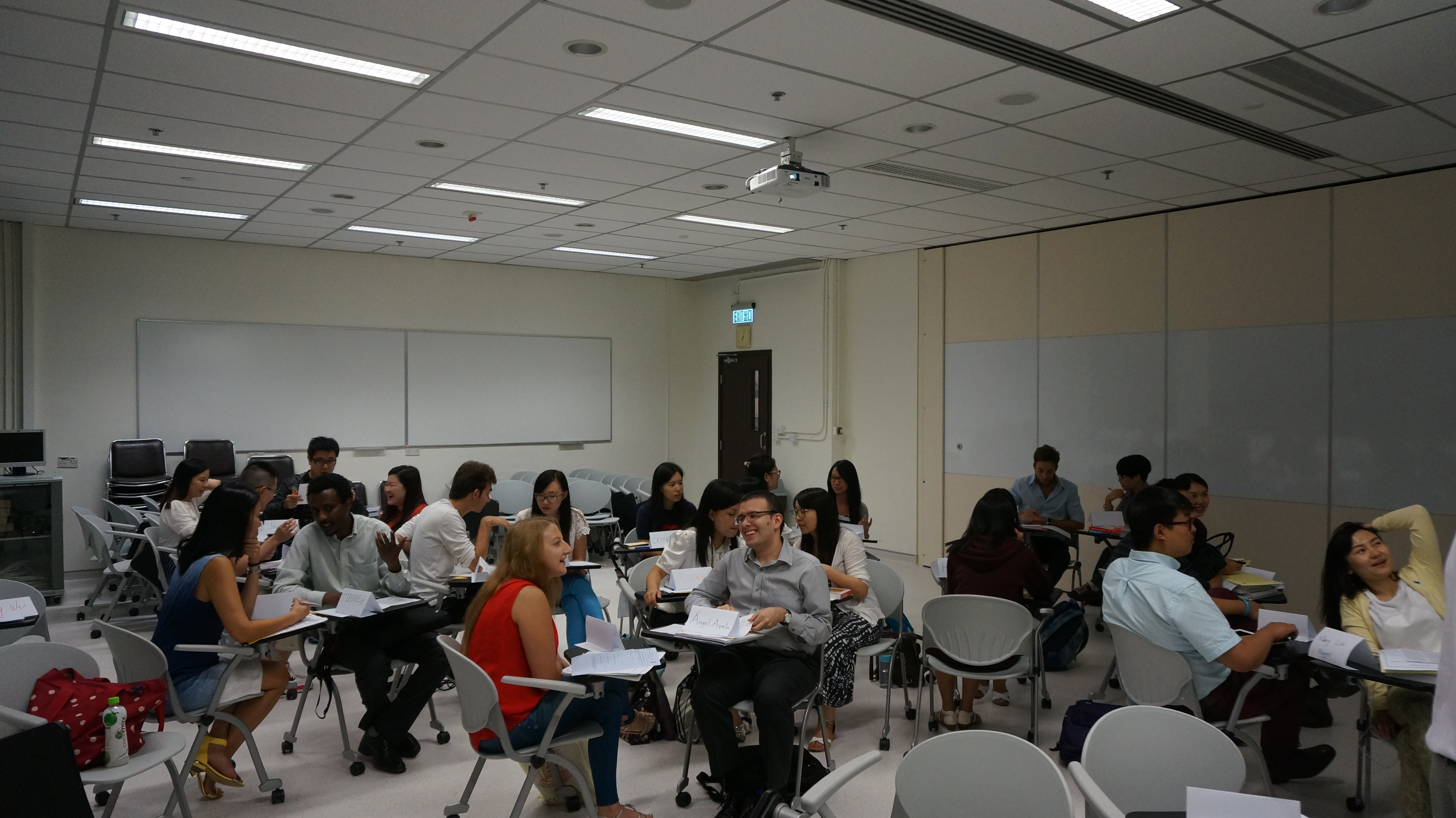

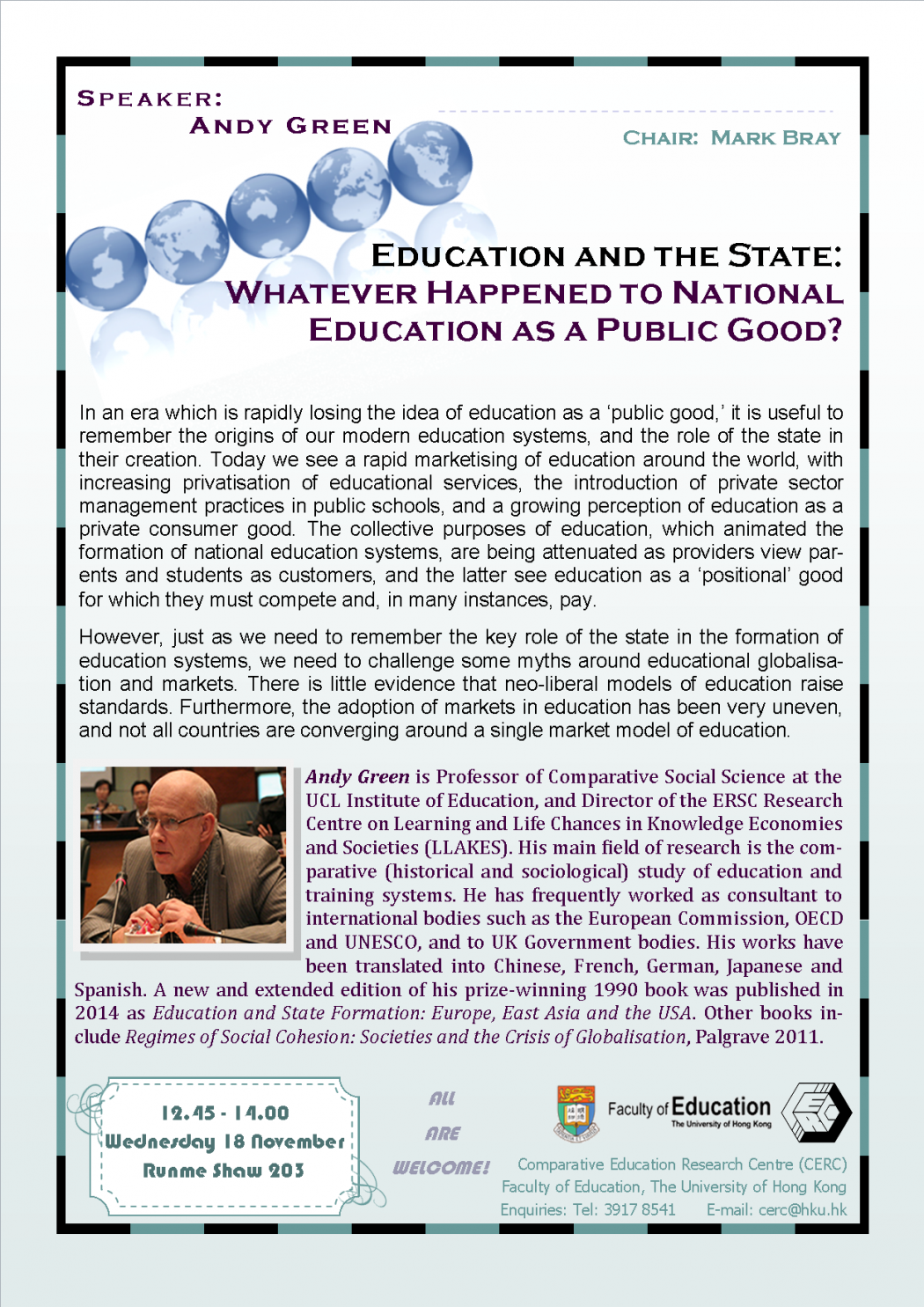
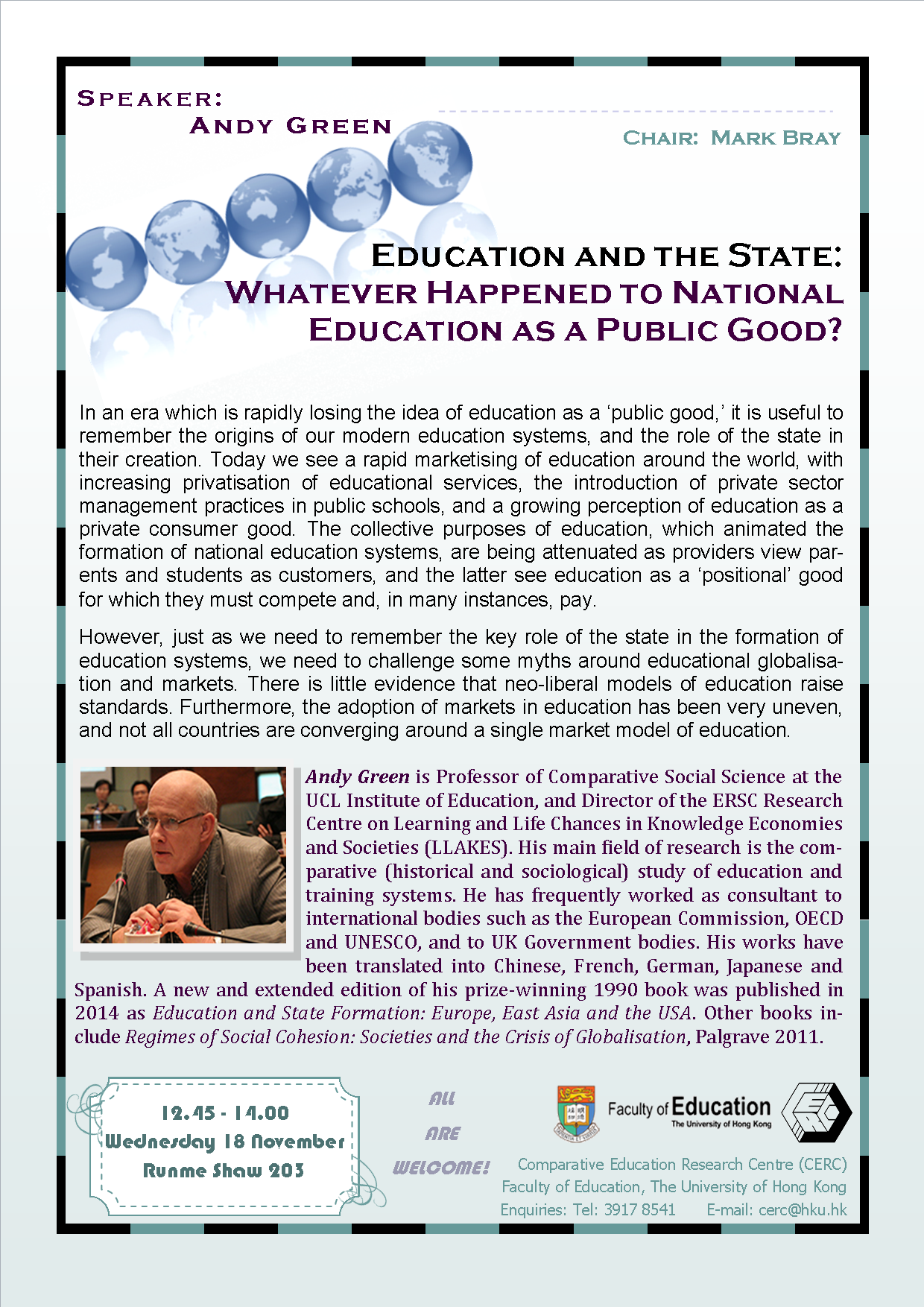
Education and the State: Whatever Happened to National Education as a Public Good?
By Andy Green
Chair: Mark Bray
In an era which is rapidly losing the idea of education as a ‘public good,’ it is useful to remember the origins of our modern education systems, and the role of the state in their creation. Today we see a rapid marketising of education around the world, with increasing privatisation of educational services, the introduction of private sector management practices in public schools, and a growing perception of education as a private consumer good. The collective purposes of education, which animated the formation of national education systems, are being attenuated as providers view parents and students as customers, and the latter see education as a ‘positional’ good for which they must compete and, in many instances, pay.
However, just as we need to remember the key role of the state in the formation of education systems, we need to challenge some myths around educational globalization and markets. There is little evidence that neo-liberal models of education raise standards. Furthermore, the adoption of markets in education has been very uneven, and not all countries are converging around a single market model of education.
Andy Green is Professor of Comparative Social Science at the UCL Institute of Education, and Director of the ERSC Research Centre on Learning and Life Chances in Knowledge Economies and Societies (LLAKES). His main field of research is the com-parative (historical and sociological) study of education and training systems. He has frequently worked as consultant to international bodies such as the European Commission, OECD and UNESCO, and to UK Government bodies. His works have been translated into Chinese, French, German, Japanese and Spanish. A new and extended edition of his prize-winning 1990 book was published in 2014 as Education and State Formation: Europe, East Asia and the USA. Other books in-clude Regimes of Social Cohesion: Societies and the Crisis of Globalisation, Palgrave 2011.
Date: Wednesday 18 November
Time: 12.45 – 14.00
Venue: Room 203 Runme Shaw Building
All are welcome!

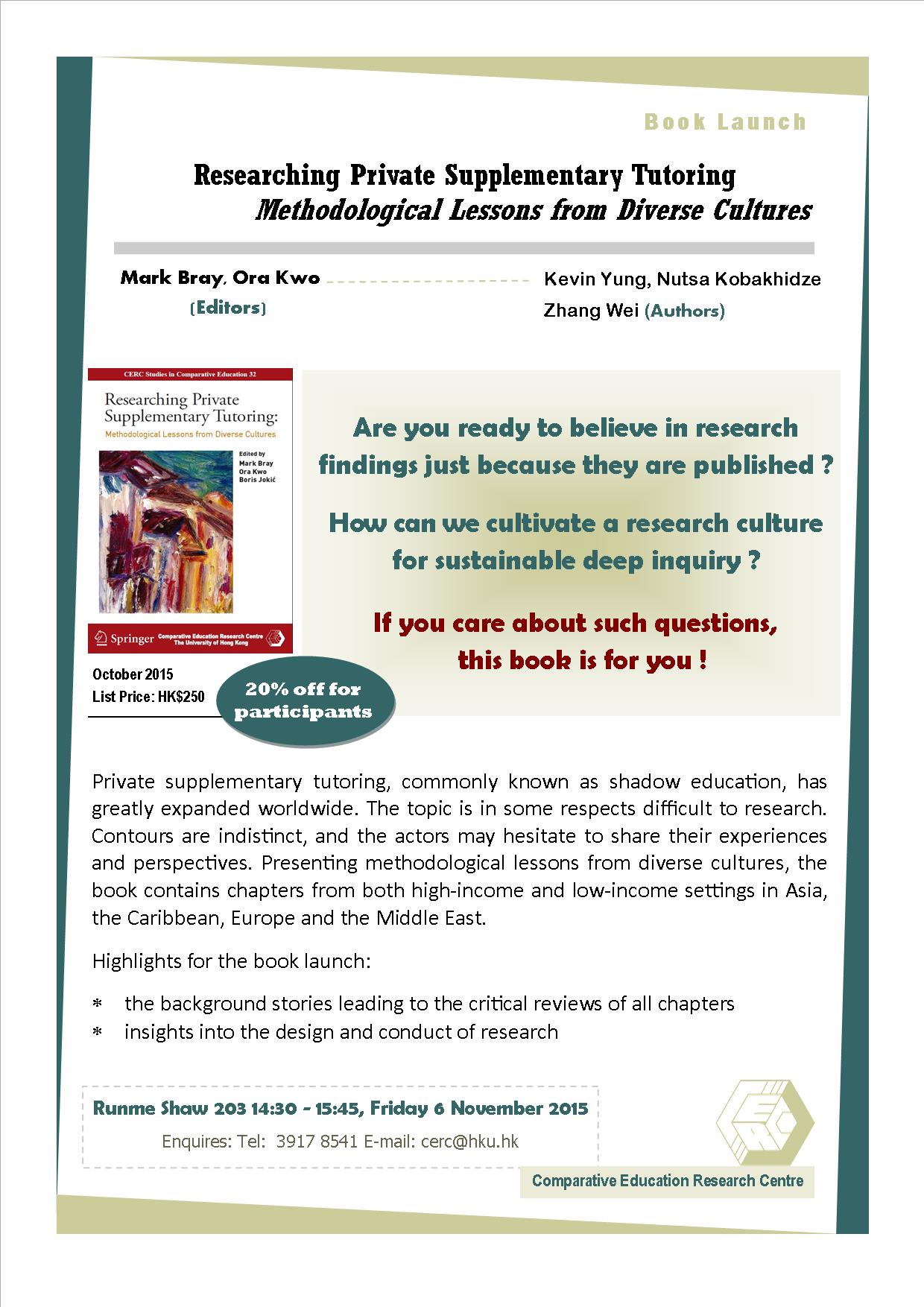
Researching Private Supplementary Tutoring: Methodological Lessons from Diverse Cultures
By Mark Bray, Ora Kwo (Editors)
&
Kevin Yung, Nutsa Kobakhidze
Zhang Wei (Authors)
Are you ready to believe in research findings just because they are published?
How can we cultivate a research culture for sustainable deep inquiry?
If you care about such questions, this book is for you!
Private supplementary tutoring, commonly known as shadow education, has greatly expanded worldwide. The topic is in some respects difficult to research. Contours are indistinct, and the actors may hesitate to share their experiences and perspectives. Presenting methodological lessons from diverse cultures, the book contains chapters from both high-income and low-income settings in Asia, the Caribbean, Europe and the Middle East.
Highlights for the book launch:
- the background stories leading to the critical reviews of all chapters
- insights into the design and conduct of research
Date: Friday 6 November 2015
Time: 14:30 – 15:45
Venue: Room 203 Runme Shaw Building
Participants are entitled to a 20% discount off the list price (HK$250)
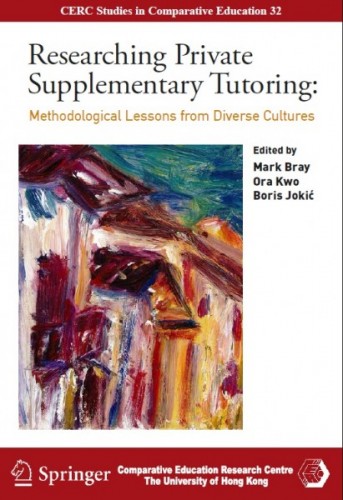
New book in CERC-Springer Series
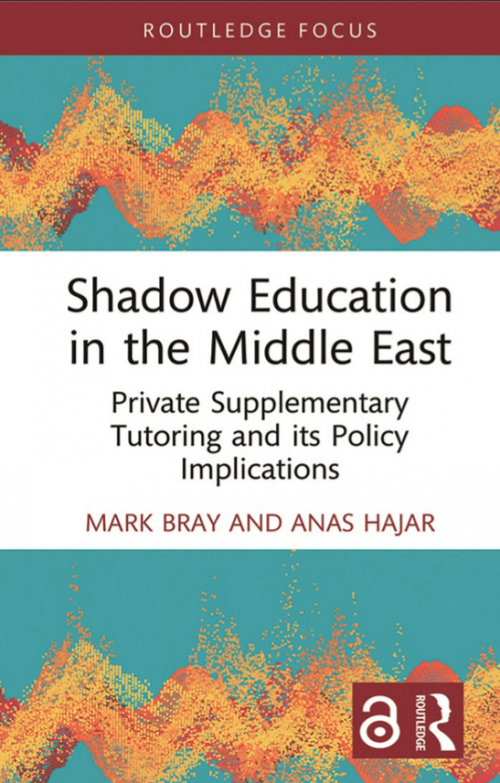
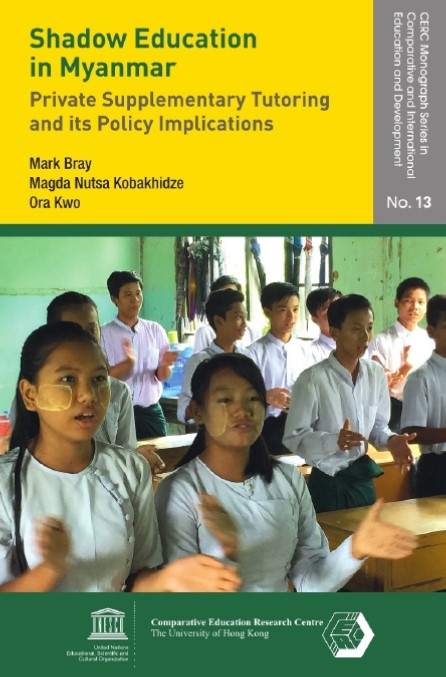
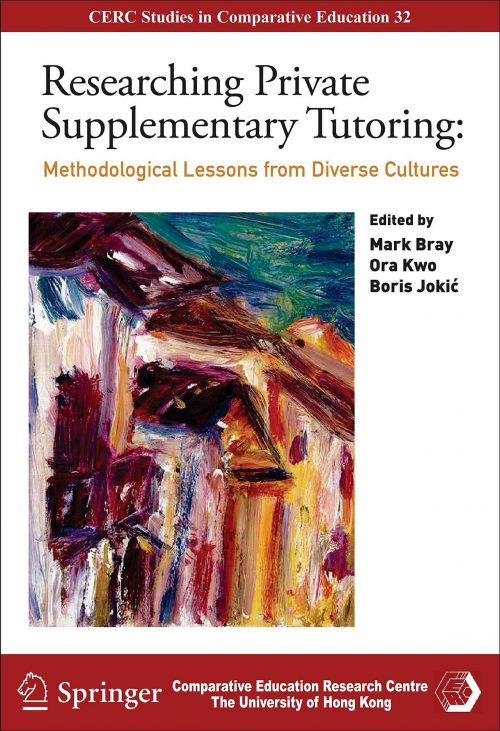
CERC has just published its No. 32 of CERC Studies in Comparative Education: Researching Private Supplementary Tutoring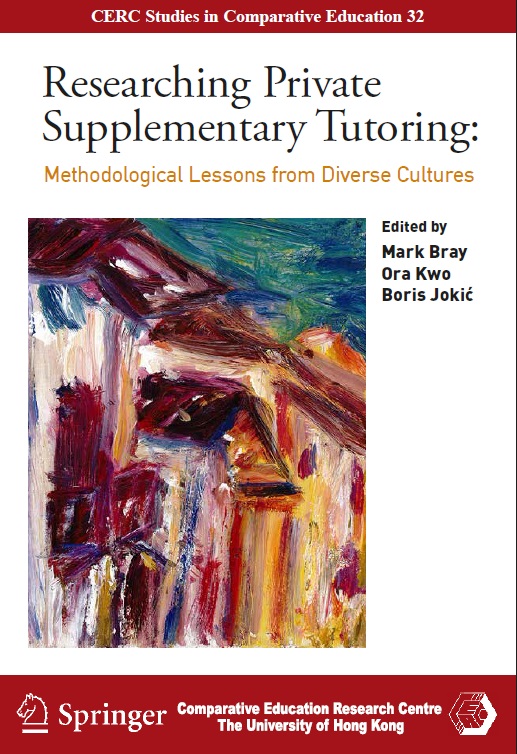
Methodological Lessons from Diverse Cultures. CERC members are entitled for 20% discount of the new book. Click here for the order information. The details of the book are as follows:
Private supplementary tutoring, widely known as shadow education because of the way that it mimics mainstream schooling, has greatly expanded worldwide. It consumes considerable family resources, provides employment for tutors, occupies the time of students, and has a backwash on regular schools.
Although such tutoring has become a major industry and a daily activity for students, tutors and families, the research literature has been slow to catch up with the phenomenon. The topic is in some respects difficult to research, precisely because it is shadowy. Contours are indistinct, and the actors may hesitate to share their experiences and perspectives.
Presenting methodological lessons from diverse cultures, the book contains chapters from both high-income and low-income settings in Asia, Caribbean, Europe and the Middle East. Sepa-rately and together, the chapters present valuable insights into the design and conduct of re-search. The book will assist both consumers and producers of research. Consumers will become better judges of the strengths, weaknesses and orientations of literature on the theme; and pro-ducers will gain insights for design of instruments, collection of data, and interpretation of findings.
The editors:
Mark Bray is UNESCO Chair Professor in Comparative Education at the University of Hong Kong.
Ora Kwo is an Associate Professor in the Comparative Education Research Centre at the University of Hong Kong.
Boris Jokić is a Scientific Associate in the Centre for Educational Re-search and Development at the Institute for Social Research in Zagreb, Croatia.
Chapters and authors:
Introduction
Mark BRAY, Ora KWO & Boris JOKIĆ
Employing Quantitative Instruments
1 Shadow Education Research through TIMSS and PIRLS: Experiences and Lessons in the Republic of Georgia
– Magda Nutsa KOBAKHIDZE
2 Research on Private Tutoring in Malaysia: Methodological Insights from a Quantitative Study
– Husaina Banu KENAYATHULLA
3 Relationships between Shadow Education and Examination Scores: Methodological Lessons from a Chinese Study in
Senior Secondary Schools
– Yu ZHANG
Discerning Qualities
4 A Qualitative Comparison of Private Tutoring in Azerbaijan, Bosnia & Herzegovina, Croatia, Estonia and
Georgia: Lessons from Design and Implementation
– Boris JOKIĆ
5 Ethical Dilemmas in Shadow Education Research: Lessons from a Qualitative Study of Learners’ Experiences in
Lecture-‐‑type Tutoring in Hong Kong
– Kevin W.H. YUNG
6 Classroom Practices and Private Tuition in the Maldives: Methodological Reflections on an Ethnographic Study
– Maryam MARIYA
7 Researching Shadow Education in Iran: Methodological Experiences in an Islamic Republic
– Abbas MADANDAR ARANI
Expanding Perspectives with Mixed Approaches
8 Designing and Implementing Mixed Approaches to Shadow Education Research: Experiences and Lessons in
Hong Kong
– Mark BRAY & Ora KWO
9 Constraints and Possibilities in Small-‐‑Scale Research: A Mixed-‐‑Methods Study in West Bengal, India
– Sulata MAHESHWARI
10 A Mixed-‐‑Methods Study of Extra Lessons in Jamaica: Methodological Experiences and Reflections
– Saran STEWART
11 Researching Private Supplementary Tutoring in Cambodia: Contexts, Instruments and Approaches
– Mark BRAY, Wei ZHANG, Magda Nutsa KOBAKHIDZE & Junyan LIU
Learning and Comparing
12 How a Research Instrument Changed in Different Settings: Methodological Lessons from Adaptation and Adjustment
– Junyan LIU
13 Organisational and Cross-‐‑Cultural Issues: Learning from Research Approaches
– Mark BRAY & Ora KWO
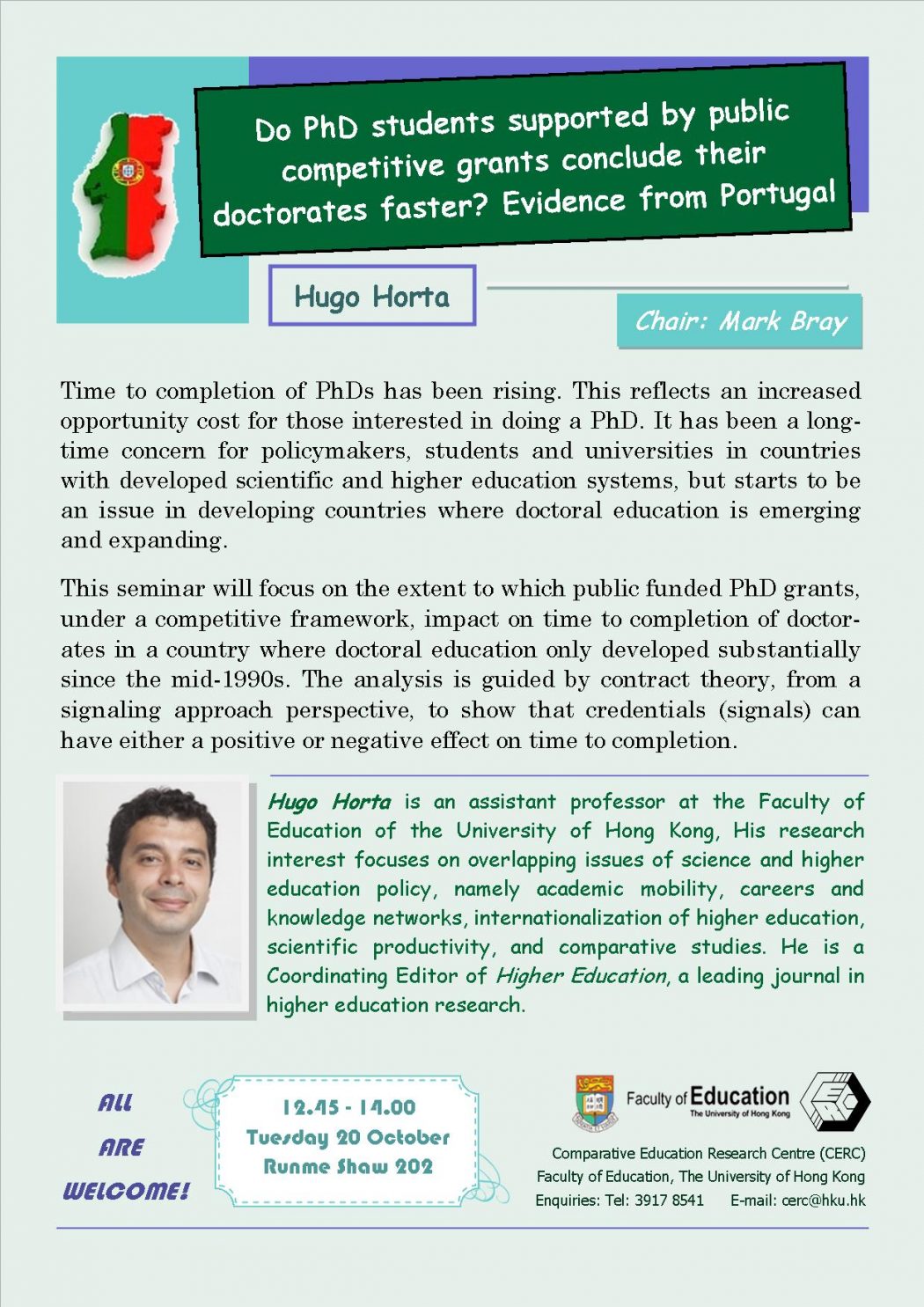
Do PhD students supported by public competitive grants conclude their doctorates faster? Evidence from Portugal
By Hugo Horta
Chair: Mark Bray
Time to completion of PhDs has been rising. This reflects an increased opportunity cost for those interested in doing a PhD. It has been a longtime concern for policymakers, students and universities in countries with developed scientific and higher education systems, but starts to be an issue in developing countries where doctoral education is emerging and expanding.
This seminar will focus on the extent to which public funded PhD grants, under a competitive framework, impact on time to completion of doctorates in a country where doctoral education only developed substantially since the mid-1990s. The analysis is guided by contract theory, from a signaling approach perspective, to show that credentials (signals) can have either a positive or negative effect on time to completion.
Hugo Horta is an assistant professor at the Faculty of Education of the University of Hong Kong, His research interest focuses on overlapping issues of science and higher education policy, namely academic mobility, careers and knowledge networks, internationalization of higher education, scientific productivity, and comparative studies. He is a Coordinating Editor of Higher Education, a leading journal in higher education research.
12.45 – 14.00
Tuesday 20 October
Runme Shaw 202


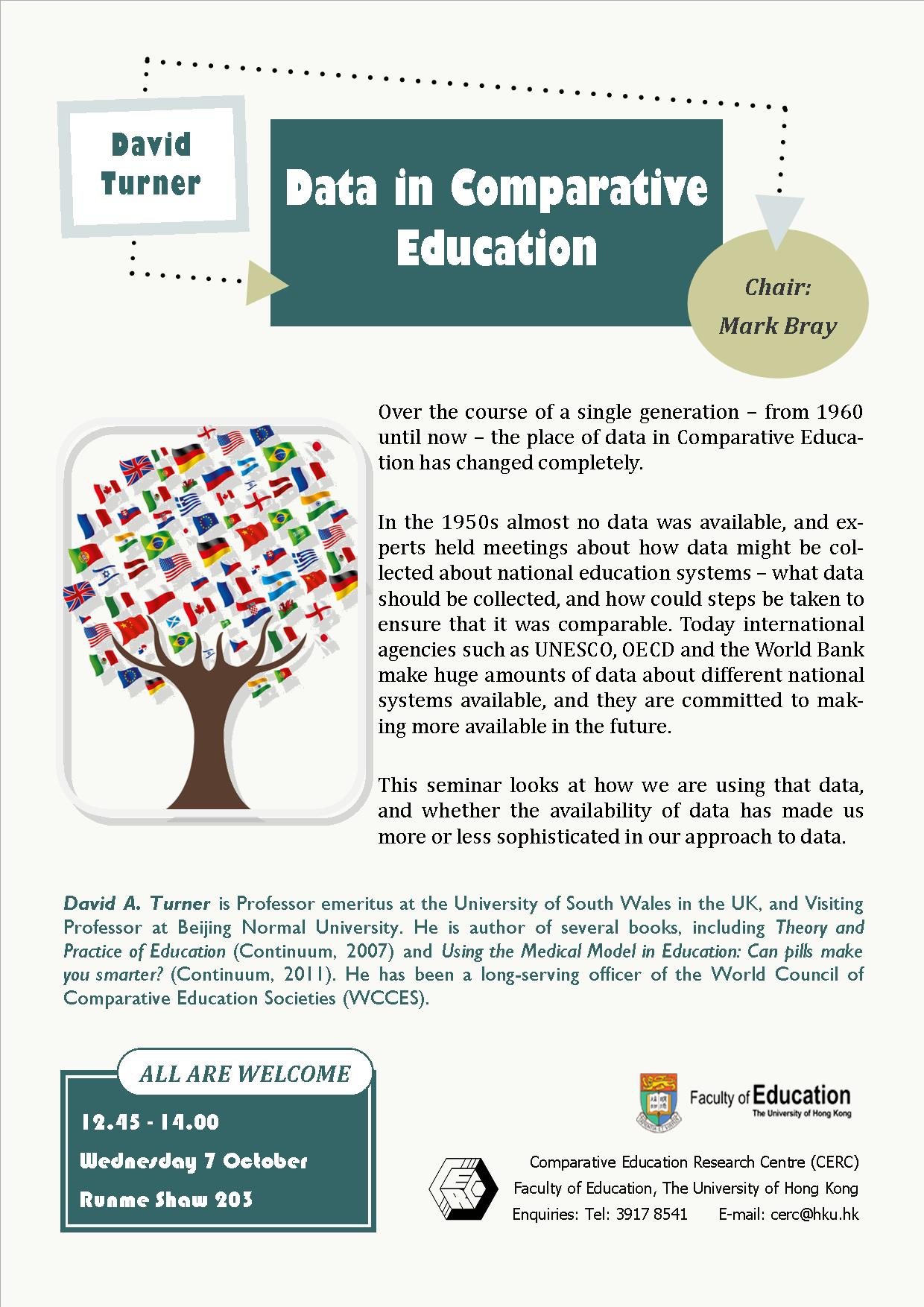
Data in Comparative Education
By David Turner
Chair: Mark Bray
Over the course of a single generation – from 1960 until now – the place of data in Comparative Education has changed completely.
In the 1950s almost no data was available, and experts held meetings about how data might be collected about national education systems – what data should be collected, and how could steps be taken to ensure that it was comparable. Today international agencies such as UNESCO, OECD and the World Bank make huge amounts of data about different national systems available, and they are committed to making more available in the future.
This seminar looks at how we are using that data, and whether the availability of data has made us more or less sophisticated in our approach to data.
David A. Turner is Professor emeritus at the University of South Wales in the UK, and Visiting Professor at Beijing Normal University. He is author of several books, including Theory and Practice of Education (Continuum, 2007) and Using the Medical Model in Education: Can pills make you smarter? (Continuum, 2011). He has been a long-serving officer of the World Council of Comparative Education Societies (WCCES).
Date: Wednesday 7 October 2015
Time: 12.45 – 14.00
Venue: Room 203 Runme Shaw Building
All are welcome!