Dear CERC members,
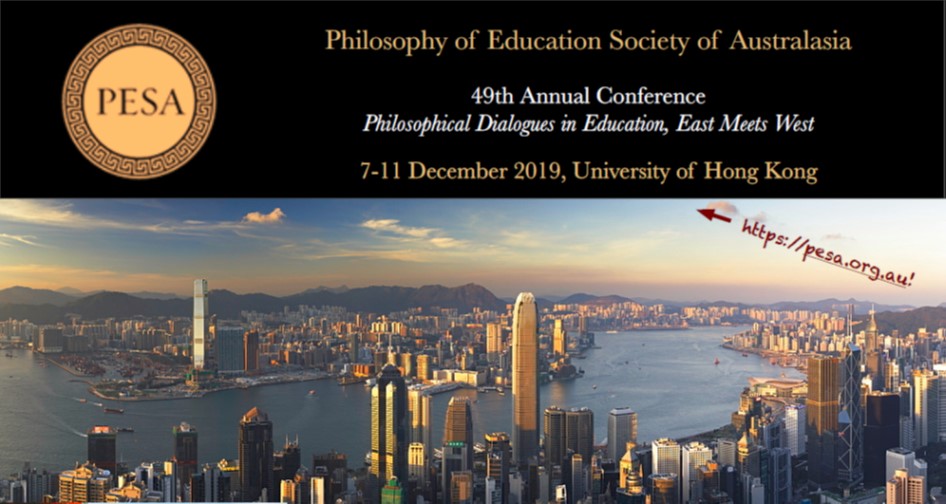
It is my honour to invite you to the 49th Annual Conference of the Philosophy of Education Society of Australasia (PESA), to be held at the University of Hong Kong, December 7-11, 2019. With the theme, “Philosophical Dialogues in Education, East Meets West,” the Conference welcomes research exploring diversity in inquiry, argument, and theory, within and across traditions, and the significance for philosophy of education of embracing comparative, transcultural, and intercultural approaches.
The conference website is online now, and open for submissions for presentations, refereed papers, symposia, and alternative sessions: https://pesa.org.au/conference.
PESA aims to promote research and teaching in philosophy of education. Our members come from around the world: Australia and New Zealand, as well as countries across Asia, Europe, and North America. As we are geographically diverse, so too are we pluralistic regarding the value of different approaches to philosophy of education, as practiced in different contexts. Our annual conference is well-known as a supportive and friendly environment for new students and scholars in the field, as well as world-rated intellectual leaders. PESA members are also active in promoting and demonstrating the importance of philosophy of education for teachers and other educational professionals.
Known as Asia’s World City, Hong Kong rarely fails to impress visitors, whether they are keen on night markets, art, or designer shopping; or hiking the 100s of kilometres of trails in the parks which make up 40% of Hong Kong’s land, across 263 islands and mainland territory. The University of Hong Kong is the oldest tertiary institution in Hong Kong. It has been regarded as one of the most internationalised universities in the world as well as one of the most prestigious in Asia. The Faculty of Education is ranked #4 by the Times Higher Education World Rankings and #6 by QS World Rankings. The Comparative Education Research Centre builds on the Faculty’s expertise in comparative and global studies in education.
See you in Hong Kong!
Best wishes,
Liz Jackson
Director, CERC
President, PESA
 Our inaugural event
A screening of "First, they killed my father"
We had our first event on Friday, 15th of February and we would all like to sincerely thank everyone who
attended. We would like to thank all our guests from the Cambodian Association of Hong Kong, in particular
Mr Ravindra Ngo, Mr Vikrant Chap, and Mr Vutha Ros, for sharing the event with others and for leading the
discussion after the movie screening.
Although it was a sensitive topic, and deeply personal for several of the attendees, we all benefited
from the sincere and enlightening discussion we shared afterwards. I think we all took away a better
understanding of how genocides affect nations and how universal and resilient the human spirit is.
It was not just about loss though, as we discussed the future of Cambodia and the issues the nation now faces.
It must recoup it's economic loss, its cultural identity, and its history. This will be a difficult process and there is
uncertainty how it could or should be achieved so it will be a tricky road to walk. Cambodia has a rich cultural
and national identity, which has been partly forgotten because of the tragedies committed under the Khmer
Rouge, but there is an identity, and possibly going beyond the recent history is a way to find it.
I think we all hope that Cambodia will not be lost to the highest bidder though. For a land so beautiful and a
people so kind and strong, the tragic past events will hopefully not leave a dark mark for long. We look
forward to working with the Cambodian Association of Hong Kong further through CERC and being able to
spread more awareness and understanding.
Our inaugural event
A screening of "First, they killed my father"
We had our first event on Friday, 15th of February and we would all like to sincerely thank everyone who
attended. We would like to thank all our guests from the Cambodian Association of Hong Kong, in particular
Mr Ravindra Ngo, Mr Vikrant Chap, and Mr Vutha Ros, for sharing the event with others and for leading the
discussion after the movie screening.
Although it was a sensitive topic, and deeply personal for several of the attendees, we all benefited
from the sincere and enlightening discussion we shared afterwards. I think we all took away a better
understanding of how genocides affect nations and how universal and resilient the human spirit is.
It was not just about loss though, as we discussed the future of Cambodia and the issues the nation now faces.
It must recoup it's economic loss, its cultural identity, and its history. This will be a difficult process and there is
uncertainty how it could or should be achieved so it will be a tricky road to walk. Cambodia has a rich cultural
and national identity, which has been partly forgotten because of the tragedies committed under the Khmer
Rouge, but there is an identity, and possibly going beyond the recent history is a way to find it.
I think we all hope that Cambodia will not be lost to the highest bidder though. For a land so beautiful and a
people so kind and strong, the tragic past events will hopefully not leave a dark mark for long. We look
forward to working with the Cambodian Association of Hong Kong further through CERC and being able to
spread more awareness and understanding.
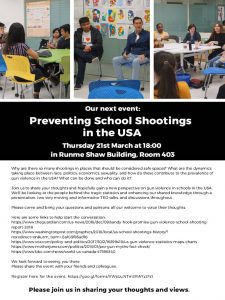 Our next event:
Thursday 21st March at 18:00
in Runme Shaw Building, Room 403
Why are there so many shootings in places that should be considered safe spaces? What are the dynamics
taking place between race, politics, economics, sexuality, and how do these contribute to the prevalence of
gun violence in the USA? What can be done and who can do it?
Join us to share your thoughts and hopefully gain a new perspective on gun violence in schools in the USA.
We'll be looking at the people behind the tragic statistics and enhancing our shared knowledge through a
presentation, two very moving and informative TED talks, and discussions throughout.
Please come and bring your questions and opinions, all our welcome to voice their thoughts.
Here are some links to help start the conversation:
https://www.theguardian.com/us-news/2018/dec/09/sandy-hook-promise-gun-violence-school-shootingreport-2018
https://www.washingtonpost.com/graphics/2018/local/us-school-shootings-history/?noredirect=on&utm_term=.8a109f65ad16
https://www.vox.com/policy-and-politics/2017/10/2/16399418/us-gun-violence-statistics-maps-charts
Our next event:
Thursday 21st March at 18:00
in Runme Shaw Building, Room 403
Why are there so many shootings in places that should be considered safe spaces? What are the dynamics
taking place between race, politics, economics, sexuality, and how do these contribute to the prevalence of
gun violence in the USA? What can be done and who can do it?
Join us to share your thoughts and hopefully gain a new perspective on gun violence in schools in the USA.
We'll be looking at the people behind the tragic statistics and enhancing our shared knowledge through a
presentation, two very moving and informative TED talks, and discussions throughout.
Please come and bring your questions and opinions, all our welcome to voice their thoughts.
Here are some links to help start the conversation:
https://www.theguardian.com/us-news/2018/dec/09/sandy-hook-promise-gun-violence-school-shootingreport-2018
https://www.washingtonpost.com/graphics/2018/local/us-school-shootings-history/?noredirect=on&utm_term=.8a109f65ad16
https://www.vox.com/policy-and-politics/2017/10/2/16399418/us-gun-violence-statistics-maps-charts

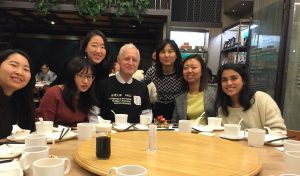 The MEd (CGSED) group has established a tradition of an annual alumni dinner. Vivica Xiong (2011-13) is the organizer, and on 14 December 2017 convened 20 past and present students at the Bijas restaurant on the HKU campus. In the line-up group photograph, Vivica is second from the left.
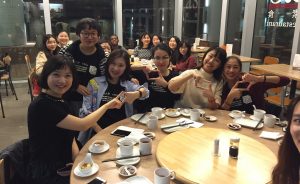 other. The CGSED students benefit not only from their peers but also their predecessors, finding intern opportunities and even future employment.

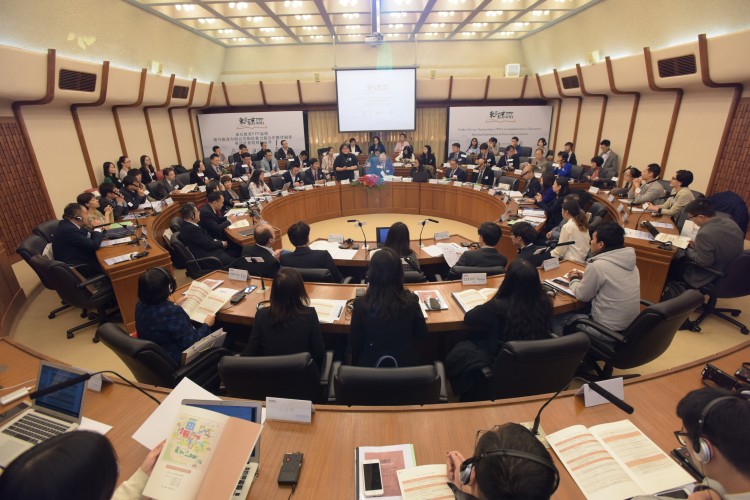
 The starting point was recognition that boundaries in education are less firm than before. Traditionally, formal schooling has been responsibility and domain of the public sector, but recent decades have brought a flourishing private sector in supplementary education. Most obvious is the academic form, provided by small, medium-sized and large companies.
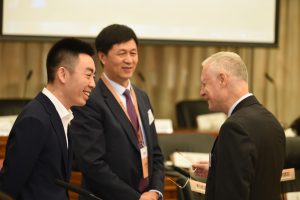 Mark Bray, the HKU’s UNESCO Chair Professor in Comparative Education. “It is breaking new conceptual ground”, he added, “not only in the four jurisdictions but also globally.” The University, he pointed out, provides a neutral arena in which stakeholders can dialogue on sensitive topics to identify ways forward in service of the common good.
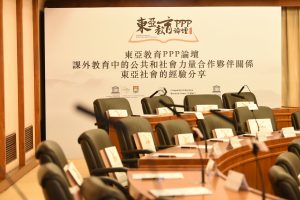 The organizers did not seek consensus on a single mode of operation for every jurisdiction. Rather, they placed in the arena sets of experiences for participants to discuss and learn from each other. They noted that the burden of governments worried about regulation can be alleviated when the supplementary education providers engage in self-regulation. Participants heard various examples, highlighting ways in which all stakeholders can follow their own mandates yet productively serve the common good.