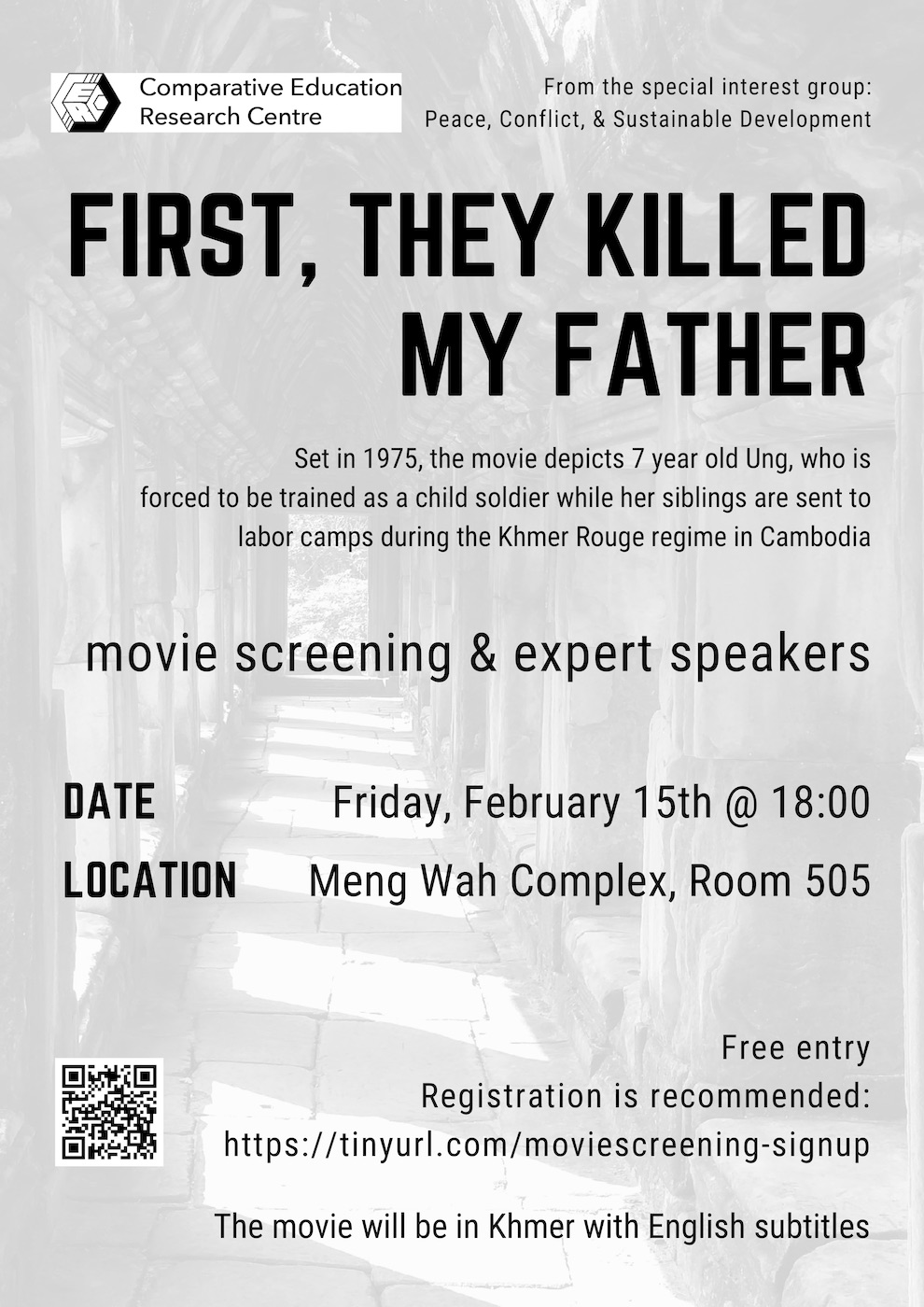
The emerging CERC Special Interest Group on ‘Peace, Conflict, and Sustainable Development’ also welcomes new members. The SIG themes will be discussed as well, with participants invited to join and help shape this emerging SIG from the ground up.


The emerging CERC Special Interest Group on ‘Peace, Conflict, and Sustainable Development’ also welcomes new members. The SIG themes will be discussed as well, with participants invited to join and help shape this emerging SIG from the ground up.
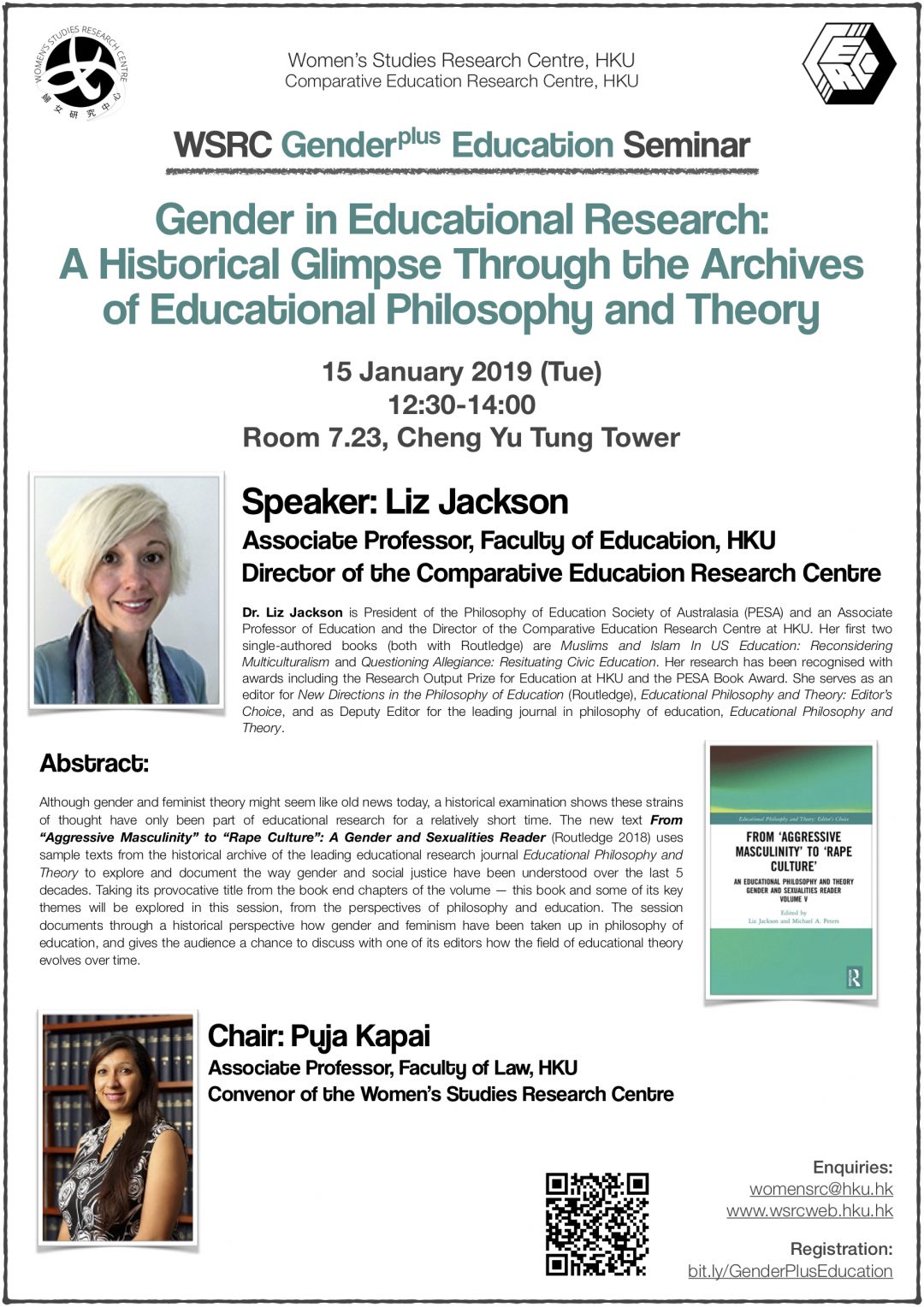
This Gender Plus Education seminar is part of the Women’s Studies Research Centre’s GENDER PLUS series.
Although gender and feminist theory might seem like old news today, a historical examination shows these strains of thought have only been part of educational research for a relatively short time. The new text From “Aggressive Masculinity” to “Rape Culture”: A Gender and Sexualities Reader (Routledge 2018) uses sample texts from the historical archive of the leading educational research journal Educational Philosophy and Theory to explore and document the way gender and social justice have been understood over the last 5 decades. Taking its provocative title from the book end chapters of the volume — this book and some of its key themes will be explored in this session, from the perspectives of philosophy and education.
The session documents through a historical perspective how gender and feminism have been taken up in philosophy of education, and gives the audience a chance to discuss with one of its editors how the field of educational theory evolves over time. The session will be chaired by Puja Kapai, Associate Professor of Law and Convenor of the Women’s Studies Research Centre.
Dr. Liz Jackson is President of the Philosophy of Education Society of Australasia (PESA) and an Associate Professor of Education and the Director of the Comparative Education Research Centre at HKU. Her first two single-authored books (both with Routledge) are Muslims and Islam In US Education: Reconsidering Multiculturalism and Questioning Allegiance: Resituating Civic Education. Her research has been recognised with awards including the Research Output Prize for Education at HKU and the PESA Book Award. She serves as an editor for New Directions in the Philosophy of Education (Routledge), Educational Philosophy and Theory: Editor’s Choice, and as Deputy Editor for the leading journal in philosophy of education, Educational Philosophy and Theory.
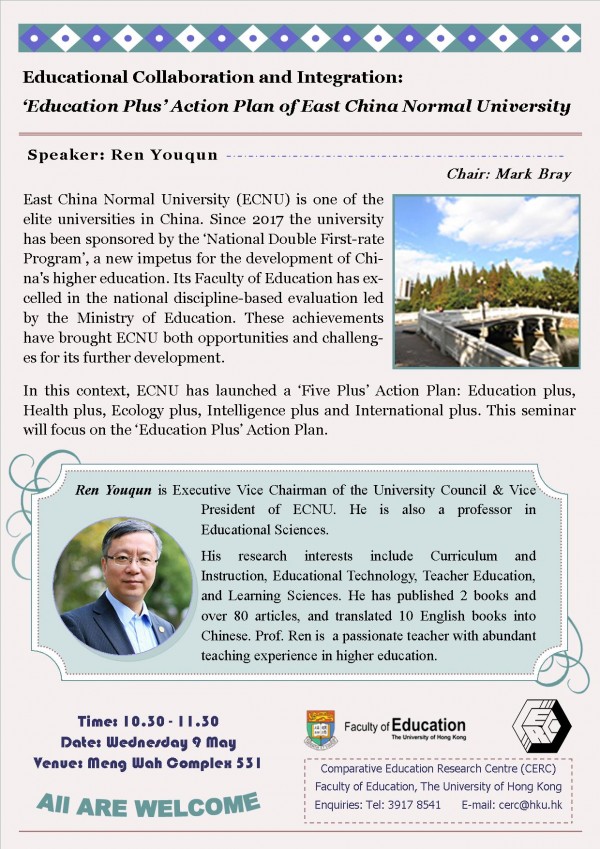
By Ren Youqun
Chair: Mark Bray
Ren Youqun is Executive Vice Chairman of the University Council & Vice President of ECNU. He is also a professor in Educational Sciences.
His research interests include Curriculum and Instruction, Educational Technology, Teacher Education, and Learning Sciences. He has published 2 books and over 80 articles, and translated 10 English books into Chinese. Prof. Ren is a passionate teacher with abundant teaching experience in higher education.
Abstract: East China Normal University (ECNU) is one of the elite universities in China. Since 2017 the university has been sponsored by the ‘National Double First-rate Program’, a new impetus for the development of China’s higher education. Its Faculty of Education has excelled in the national discipline-based evaluation led by the Ministry of Education. These achievements have brought ECNU both opportunities and challenges for its further development.
In this context, ECNU has launched a ‘Five Plus’ Action Plan: Education plus, Health plus, Ecology plus, Intelligence plus and International plus. This seminar will focus on the ‘Education Plus’ Action Plan.
Time: 10.30 – 11.30
Date: Wednesday 9 May
Venue: Meng Wah Complex 531
All are welcome!
Click here for the poster.
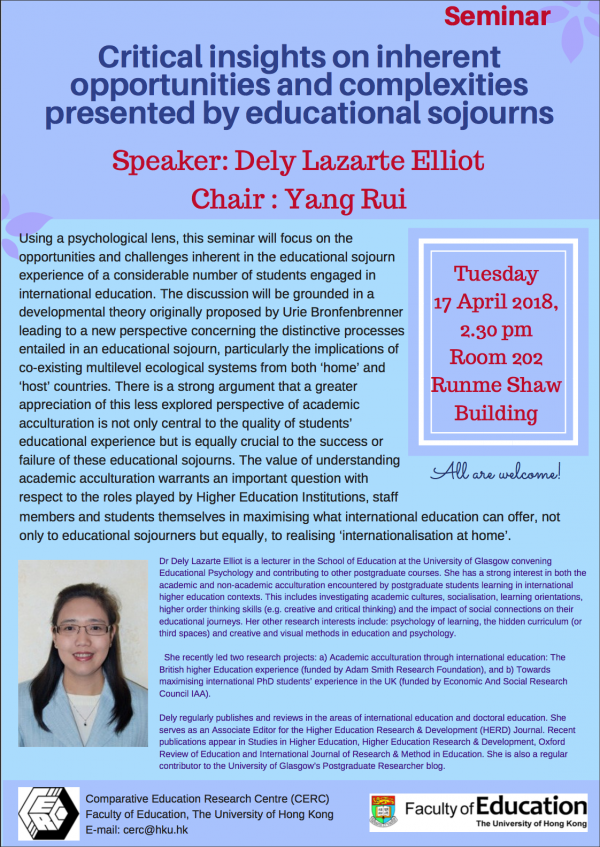
By Dely Lazarte Elliot
Chair: Yang Rui
Using a psychological lens, this seminar will focus on the opportunities and challenges inherent in the educational sojourn experience of a considerable number of students engaged in international education. The discussion will be grounded in a developmental theory originally proposed by Urie Bronfenbrenner leading to a new perspective concerning the distinctive processes entailed in an educational sojourn, particularly the implications of co-existing multilevel ecological systems from both ‘home’ and ‘host’ countries. There is a strong argument that a greater appreciation of this less explored perspective of academic acculturation is not only central to the quality of students’ educational experience but is equally crucial to the success or failure of these educational sojourns. The value of understanding academic acculturation warrants an important question with respect to the roles played by Higher Education Institutions, staff members and students themselves in maximising what international education can offer, not only to educational sojourners but equally, to realising ‘internationalisation at home’.
Dr Dely Lazarte Elliot is a lecturer in the School of Education at the University of Glasgow convening Educational Psychology and contributing to other postgraduate courses. She has a strong interest in both the academic and non-academic acculturation encountered by postgraduate students learning in international higher education contexts.
She recently led two research projects: a) Academic acculturation through international education: The British higher Education experience (funded by Adam Smith Research Foundation), and b) Towards maximising international PhD students’ experience in the UK (funded by Economic And Social Research Council IAA).
Dely regularly publishes and reviews in the areas of international education and doctoral education. She serves as an Associate Editor for the Higher Education Research & Development (HERD) Journal. Recent publications appear in Studies in Higher Education, Higher Education Research & Development, Oxford Review of Education and International Journal of Research & Method in Education.
Date: Tuesday 17 April 2018
Time: 14:30 – 15:45
Venue: Room 202, Runme Shaw Building
All are welcome!
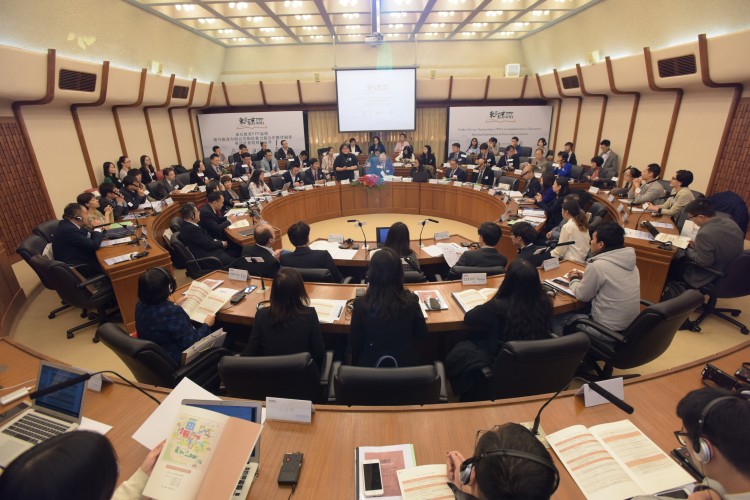
On 9 and 10 December 2017, CERC hosted a remarkable Policy Forum entitled ‘Public-Private Partnerships in Supplementary Education: Sharing Experiences in East Asian Contexts’. The event was co-hosted with UNESCO, and attracted 53 participants from governments, companies, schools, and research institutions from Hong Kong, Japan, Mainland China, and the Republic of Korea.
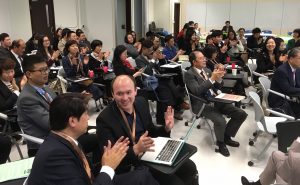 The starting point was recognition that boundaries in education are less firm than before. Traditionally, formal schooling has been responsibility and domain of the public sector, but recent decades have brought a flourishing private sector in supplementary education. Most obvious is the academic form, provided by small, medium-sized and large companies.
“This was a unique gathering”, remarked 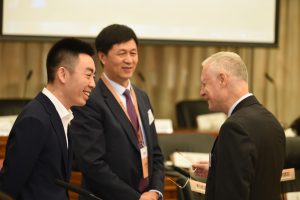 Mark Bray, the HKU’s UNESCO Chair Professor in Comparative Education. “It is breaking new conceptual ground”, he added, “not only in the four jurisdictions but also globally.” The University, he pointed out, provides a neutral arena in which stakeholders can dialogue on sensitive topics to identify ways forward in service of the common good.
The event brought together directors from both large and small companies, officers in Ministries of Education, and Associations of Supplementary Education Providers.
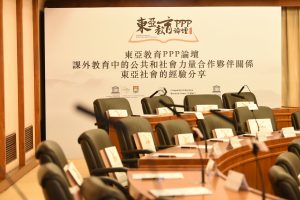 The organizers did not seek consensus on a single mode of operation for every jurisdiction. Rather, they placed in the arena sets of experiences for participants to discuss and learn from each other. They noted that the burden of governments worried about regulation can be alleviated when the supplementary education providers engage in self-regulation. Participants heard various examples, highlighting ways in which all stakeholders can follow their own mandates yet productively serve the common good.
The next steps will include dissemination of key points. Ms Huong Le Thu indicated that UNESCO will play a role, using its global platform to disseminate the findings from East Asia to the wider community.
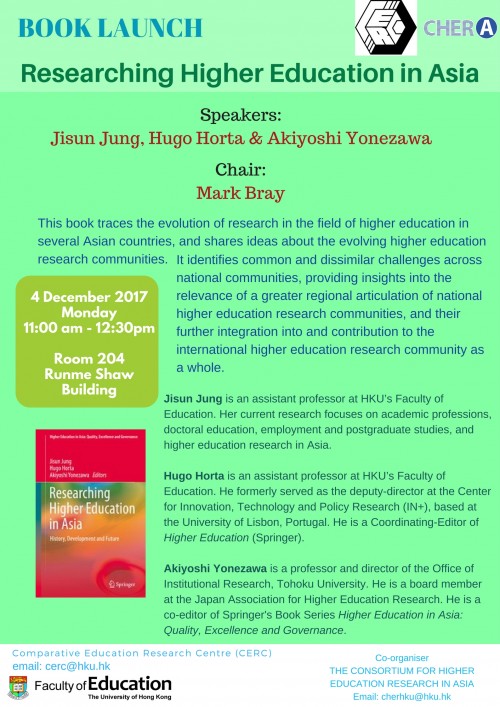
By Jisun Jung, Hugo Horta & Akiyoshi Yonezawa
Chair: Mark Bray
4 December 2017 Monday
11:00 am – 12:30pm
Room 204 Runme Shaw Building
This book traces the evolution of research in the field of higher education in several Asian countries, and shares ideas about the evolving higher education research communities.
It identifies common and dissimilar challenges across national communities, providing insights into the relevance of a greater regional articulation of national higher education research communities, and their further integration into and contribution to the international higher education research community as a whole.
Jisun Jung is an assistant professor at HKU’s Faculty of Education. Her current research focuses on academic professions, doctoral education, employment and postgraduate studies, and higher education research in Asia.
Hugo Horta is an assistant professor at HKU’s Faculty of Education. He formerly served as the deputy-director at the Center for Innovation, Technology and Policy Research (IN+), based at the University of Lisbon, Portugal. He is a Coordinating-Editor of Higher Education (Springer).
Akiyoshi Yonezawa is a professor and director of the Office of Institutional Research, Tohoku University. He is a board member at the Japan Association for Higher Education Research. He is a co-editor of Springer’s Book Series Higher Education in Asia: Quality, Excellence and Governance.
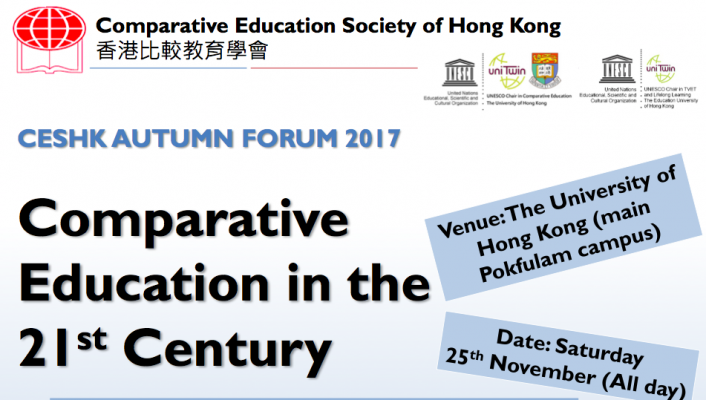
Comparative Education in the 21st Century
Date: Saturday 25th November 2017 (All day)
Venue: The University of Hong Kong
Registration is free-of-charge for current members. New members are welcome to join CESHK before the Forum at:
The Forum is a one day event and light refreshments will be served. You can either bring or buy your own lunch from the number of restaurants and other eating facilities on the HKU campus.
The deadline for submissions is: 1st October 2017.
Please use the following link for submission:
https://docs.google.com/forms/d/e/1FAIpQLSdHjAWcMHftdaxMDfA7HVgTRJahxvWoUxFga0bCiyG5C5Es7A/viewform
For further information, please email: ceshk.secretary@gmail.com
Please click here for the PDF version of the Call for Papers.


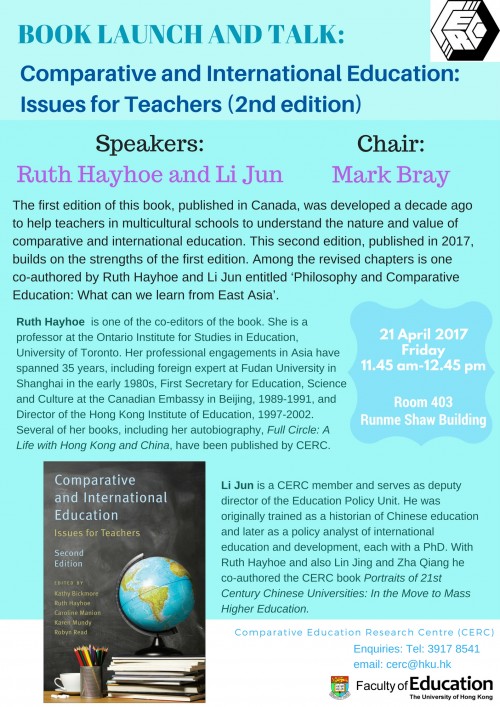
Speakers: Ruth Hayhoe and Li Jun
Chair: Mark Bray
Friday 21 April, 11:45am-12:45 pm.
Room 403 Runme Shaw Building
The first edition of this book, published in Canada, was developed a decade ago to help teachers in multicultural schools to understand the nature and value of comparative and international education. This second edition, published in 2017, builds on the strengths of the first edition. Among the revised chapters is one co-authored by Ruth Hayhoe and Li Jun entitled ‘Philosophy and Comparative Education: What can we learn from East Asia’.
Ruth Hayhoe is one of the co-editors of the book. She is a professor at the Ontario Institute for Studies in Education, University of Toronto. Her professional engagements in Asia have spanned 35 years, including foreign expert at Fudan University in Shanghai in the early 1980s, First Secretary for Education, Science and Culture at the Canadian Embassy in Beijing, 1989-1991, and Director of the Hong Kong Institute of Education, 1997-2002. Several of her books, including her autobiography, Full Circle: A Life with Hong Kong and China, have been published by CERC.
Li Jun is a CERC member in the PASSE Division of the Faculty of Education. He was originally trained as a historian of Chinese education and later as a policy analyst of international education and development, each with a PhD. With Ruth Hayhoe and also Lin Jing and Zha Qiang he co-authored the CERC book Portraits of 21st Century Chinese Universities: In the Move to Mass Higher Education.
Click here for the poster.
In March 2016, Mark Bray was elected to the Presidency of the US-based Comparative and International Education Society (CIES). This is the oldest and largest society in the field, established in 1956 and having over 3,000 members.
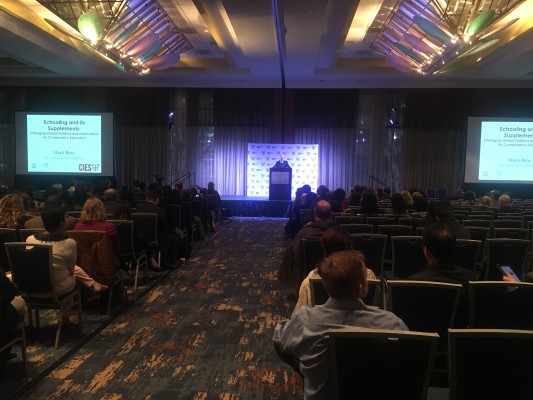
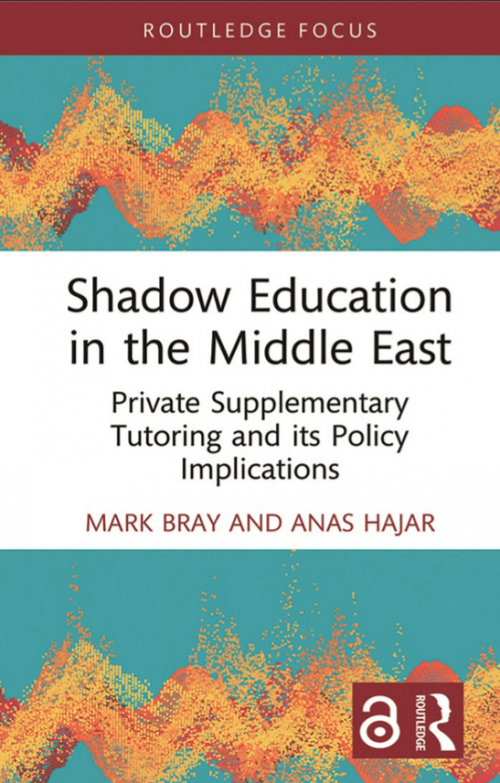
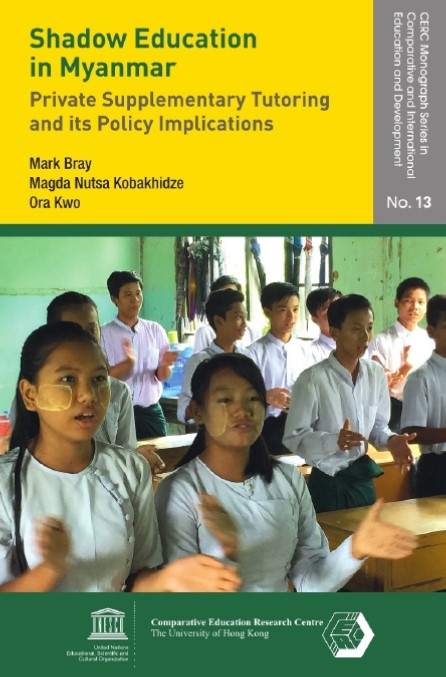
At the 61st annual conference, 6-9 March 2017 in Atlanta, USA, Mark Bray concluded his work with a 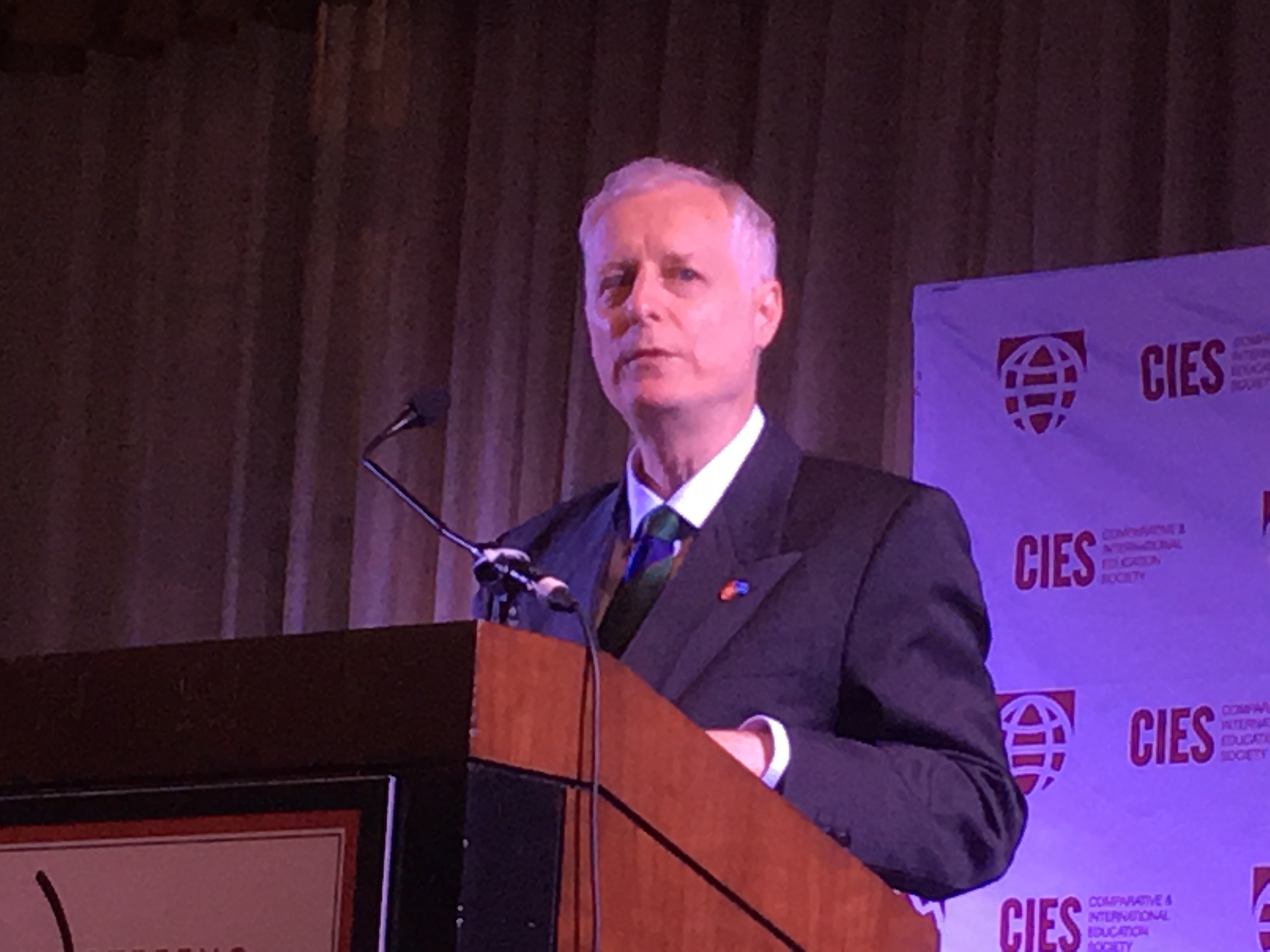 Presidential Address. It was entitled ‘Schooling and its Supplements: Changing Global Patterns and Implications for Comparative Education’. It drew on his extensive work on the so-called shadow education system of supplementary private tutoring. The lecture may be viewed here, and will in due course be published in the Society’s flagship journal Comparative Education Review.
 Mark Bray retains a CIES leadership role within the CIES as immediate Past-President on the Board of Directors.